






Introduction
Traveling to another country is an exciting experience. People travel for holidays, business meetings, education, family visits, and new opportunities. During these journeys, staying connected becomes an important part of daily life. Travelers use their smartphones to find directions, book hotels, check flight information, communicate with family, access travel documents, and discover local attractions. A reliable mobile connection makes these activities easier and helps people feel more comfortable in unfamiliar places.
However, using a mobile phone internationally can create connectivity challenges. Travelers may face expensive roaming charges, limited network access, unfamiliar mobile operators, and different SIM activation requirements. Some people continue using their home SIM card abroad, while others purchase a local physical SIM after arriving at their destination. Digital SIM technology has also introduced another option called eSIM, which allows compatible smartphones to activate mobile network profiles without inserting a traditional SIM card.
Choosing between an eSIM and a physical SIM can be confusing, especially for people traveling internationally for the first time. Both options provide access to mobile networks, but their installation methods, compatibility requirements, pricing structures, and management features are different. The right choice depends on the destination, travel duration, smartphone model, internet requirements, and personal preferences.
For example, a frequent traveler who visits several countries may prefer an eSIM because it can simplify the process of managing supported mobile profiles. On the other hand, someone visiting a country for several months may prefer a local physical SIM with suitable calling and data benefits. Some travelers may even use both options together, depending on their device and network requirements.
RankeSIM can be considered as part of the process of exploring SIM-related options and understanding international connectivity choices. In this guide, we will explain the differences between eSIM and physical SIM cards, their advantages, limitations, costs, activation methods, and important factors travelers should consider before purchasing a mobile connection.
1. Understanding eSIM and Physical SIM Technology
Before selecting a mobile connection for international travel, it is important to understand how these two SIM technologies work. Although both provide access to mobile networks, they use different methods to connect a smartphone to a mobile operator.
What Is a Physical SIM Card?
A physical SIM card is a small removable chip that connects a mobile phone to a cellular network. It contains subscriber information that allows the mobile operator to identify the customer and provide the selected mobile services.
Most traditional smartphones support physical SIM cards through a dedicated SIM tray. Users insert the card into the phone, complete the required activation process, and connect to the supported network.
Physical SIM cards are widely used around the world. Travelers can often purchase them from mobile operator stores, airports, authorized retailers, and other approved sellers.
For example, someone traveling to another country for a two-week holiday may purchase a local prepaid SIM card after arriving. The card may include mobile data, local calling, text messages, and a specific validity period, depending on the provider.
Physical SIM cards are familiar and easy to understand. However, travelers must handle the card carefully, make sure it fits their device, and sometimes complete identity verification before activation.
What Is an eSIM?
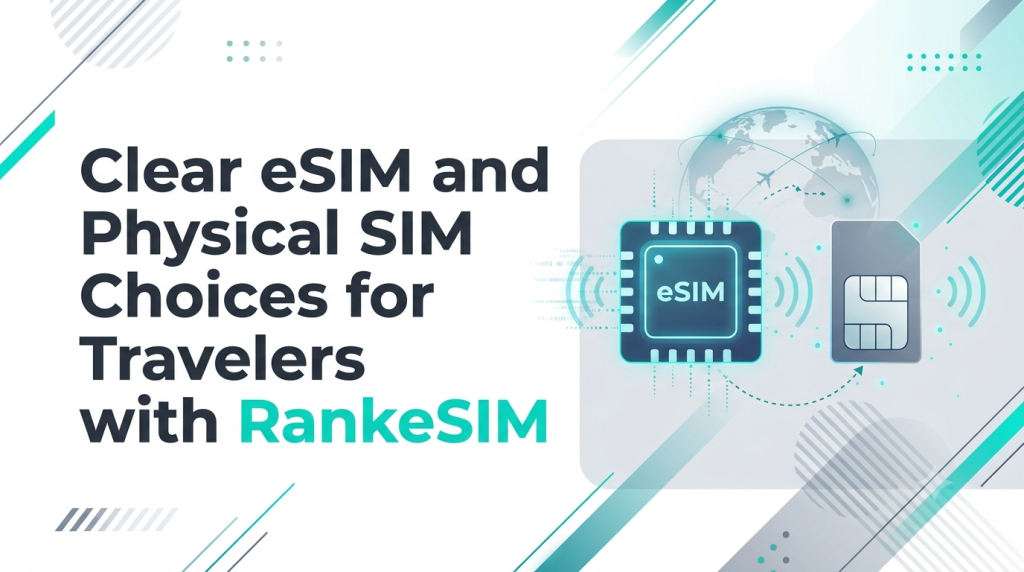
An eSIM, also known as an embedded SIM, is a digital SIM technology built into a compatible device. Instead of inserting a removable card, users download or activate a mobile network profile through a supported process.
This profile contains the information needed to connect the device to a mobile operator. Depending on the provider, activation may involve scanning a QR code, using an application, or following digital setup instructions.
eSIM technology can make international connectivity more convenient because travelers may be able to arrange a mobile data plan before reaching their destination.
For example, a traveler flying from India to Europe may purchase a suitable travel eSIM before departure. After arriving, they can activate the supported profile and connect to an available partner network, subject to the plan’s instructions and coverage.
An eSIM does not automatically provide free international connectivity. Users still need an eligible plan, a compatible device, and network availability at their destination.
2. eSIM vs. Physical SIM: Understanding the Main Differences
Both SIM technologies support mobile connectivity, but their features can affect the overall travel experience. Understanding these differences helps travelers choose an option that matches their requirements.
| Comparison Factor | eSIM | Physical SIM |
|---|---|---|
| Format | Digital SIM profile | Removable SIM card |
| Installation | Digital activation | Insert into SIM slot |
| Activation | QR code, application, or supported method | Insert card and follow activation instructions |
| Device requirement | eSIM-compatible smartphone | Compatible SIM slot |
| Physical handling | No removable card required | Card must be handled |
| Travel preparation | Can often be arranged before departure | Usually purchased before or after arrival |
| Multiple profiles | Device-dependent | Requires supported SIM slots or devices |
| Replacement | May require profile reactivation | May require a replacement card |
| Availability | Depends on country and provider | Widely available in many destinations |
| Best suited for | Compatible devices and digital convenience | Travelers preferring traditional SIM cards |
The biggest difference is the way users activate and manage their connections. A physical SIM requires a removable card, while an eSIM uses a digital profile stored in compatible device hardware.
Neither technology is automatically better for every traveler. The most suitable option depends on device support, destination coverage, service requirements, and total cost.
3. Why Travelers Are Choosing eSIM Technology
International travel often involves several mobile connectivity challenges. Travelers may need internet access immediately after landing, especially when they depend on digital boarding passes, maps, transportation applications, and hotel reservations.
eSIM technology can help simplify this process by allowing customers to arrange supported mobile connectivity before traveling.
Convenient Digital Activation
One major benefit of eSIM technology is digital activation. Travelers do not need to visit a physical store or insert a removable card when using a supported activation method.
Depending on the provider, customers can install a profile before departure and activate it according to the plan instructions. This can reduce the time spent arranging mobile connectivity after reaching a new country.
No Need to Handle a Small SIM Card
Physical SIM cards are small and can be misplaced during travel. Travelers may also need a safe place to store their original SIM when using a local replacement.
An eSIM removes the need to carry an additional removable SIM card for that digital connection. This can make smartphone management simpler, particularly for people who travel regularly.
Useful for International Trips
Some travel eSIM providers offer packages for individual countries, regions, or multiple destinations. These options may help travelers who visit several locations during one journey.
However, customers should carefully review the list of supported countries and partner networks. A regional package does not necessarily cover every country in that region.
Easier Planning Before Departure
Travelers can research available digital SIM options while preparing their itinerary. They can compare prices, data allowances, validity, and supported destinations before leaving home.
This can reduce the pressure of searching for mobile services immediately after arriving at an unfamiliar airport.
Useful for Compatible Dual-SIM Devices
Many compatible smartphones allow users to manage more than one SIM profile, although the number of active connections depends on the device.
For example, a traveler may keep their home number available for important messages while using a travel eSIM for mobile data. The exact setup depends on device settings and the home operator’s roaming conditions.
4. Benefits of Using a Physical SIM Card While Traveling
Although eSIM technology is becoming popular, physical SIM cards remain an important choice for international travelers. Many people prefer traditional SIM cards because they are familiar, easy to purchase, and supported by a wide range of smartphones. They can also be useful in countries where digital SIM services are limited or where local mobile operators mainly provide traditional SIM packages.
Easy Availability in Local Markets
Physical SIM cards are available through many mobile operator stores, airport counters, authorized retailers, and local shops. Travelers can often purchase a SIM after reaching their destination and select a package based on their expected stay.
For example, a tourist visiting Thailand for ten days may purchase a local prepaid SIM with internet data and calling benefits. A student staying in Germany for several months may prefer a local connection with a longer validity period. The available options depend on the country’s mobile operators and local registration requirements.
Purchasing a local SIM can also help travelers understand local mobile services and available network packages. However, they should compare airport prices with other authorized sellers because package costs and benefits may differ.
Suitable for Smartphones Without eSIM Support
Not every smartphone supports digital SIM technology. Some older devices and budget smartphones only support physical SIM cards.
For these users, purchasing a traditional SIM is often the most practical way to access international mobile services. They do not need to replace their smartphone simply to use a local mobile connection.
Before traveling, customers should check their device specifications and supported network bands. A phone may accept a physical SIM but still have limited compatibility with certain network technologies in another country.
Local Calling and Mobile Services
One advantage of buying a local physical SIM is that some packages include a local phone number. This can be useful when contacting hotels, restaurants, transportation services, local businesses, or other people in the destination country.
Some travel eSIM packages provide data only and do not include a traditional phone number or regular SMS services. Travelers who need local voice calling should check the package details before making a purchase.
Familiar Installation Process
Many smartphone users already understand how to insert and activate a physical SIM card. The process generally involves opening the SIM tray, inserting the card correctly, and following the provider’s activation instructions.
This familiar process can make physical SIM cards convenient for people who are not comfortable managing digital SIM profiles.
However, travelers should keep their original SIM card in a safe place if they remove it during the trip. Losing a home SIM can create problems when accessing important messages or account verification services.
5. eSIM vs. Physical SIM: Which Option Is More Cost-Effective?
Cost is one of the most important factors when selecting an international SIM option. Travelers want reliable internet access without spending too much money on mobile services.
However, comparing eSIM and physical SIM prices is not always straightforward. The final cost depends on the destination, package duration, included data, calling benefits, network coverage, and additional service charges.
An eSIM may offer a convenient prepaid data package, while a physical SIM may provide a local number and additional calling benefits. One option may be cheaper for a short visit, while another may offer better value for a longer stay.
| Cost Factor | Travel eSIM | Physical Travel SIM |
|---|---|---|
| Initial purchase | Often purchased online | Purchased online or locally |
| Activation | Usually digital | Physical installation required |
| Data packages | Varies by provider | Varies by local operator |
| Calling benefits | May be data-only | Local calling may be included |
| Validity | Depends on selected package | Depends on recharge or package |
| Additional charges | Check roaming and top-up terms | Check local usage and roaming terms |
| Best value | Depends on destination and usage | Depends on local offers and requirements |
Compare the Cost Per Day
Instead of comparing only the total purchase price, travelers should calculate the approximate daily cost.
For example, consider two hypothetical travel packages:
| Package | Total Price | Validity | Approx. Daily Cost |
|---|---|---|---|
| Travel Option A | $18 | 10 days | $1.80 |
| Travel Option B | $30 | 20 days | $1.50 |
Illustrative figures only. These are not actual RankeSIM prices or provider offers.
In this example, Option B has a lower daily cost. However, travelers should also compare the total data allowance, network availability, and other included benefits.
A cheaper daily rate does not necessarily mean better value if the package provides insufficient data.
Understand Data-Only and Calling Packages
Another important cost consideration is the type of service included.
Some travel eSIM packages are designed mainly for mobile internet. They may support online communication through messaging applications and internet-based calling services but may not provide a regular local phone number.
Physical SIM packages from local operators may include voice calls, SMS, and data together.
Travelers should decide whether they need only internet access or a complete mobile service package. This simple decision can prevent unnecessary spending.
6. How to Choose Between eSIM and Physical SIM for Different Travel Situations
The right SIM technology depends on the purpose and duration of a trip. A tourist visiting another country for a few days may have different requirements from a business professional who travels internationally every month.
Short International Holidays
Travelers going on a short holiday often need mobile internet for navigation, hotel bookings, online payments, and communication.
An eSIM can be convenient because it may be purchased and prepared before departure. This reduces the need to search for a mobile operator immediately after landing.
However, a local physical SIM can also be a suitable choice when it offers a better package or the traveler prefers local calling benefits.
Business Travel
Business travelers often depend on mobile connectivity for emails, video meetings, customer communication, and work applications.
They may prefer an eSIM because it can be arranged in advance and used alongside a supported home connection.
For example, a professional visiting two countries during one business trip may consider a regional eSIM package that covers both destinations.
Before purchasing, they should check network coverage, data limits, hotspot support, and whether voice services are included.
International Students
Students studying abroad for several months may need a stable connection for online classes, university communication, banking, and daily activities.
A local physical SIM may be useful when the student needs a local number, regular calls, and a longer-term service arrangement.
An eSIM may also be suitable if local operators provide compatible packages with appropriate data and calling benefits.
Students should compare monthly costs, registration requirements, and long-term validity rather than selecting a package based only on its initial price.
Multi-Country Trips
Travelers visiting several countries during one journey may find regional or multi-country eSIM packages useful.
For example, someone traveling through France, Italy, and Spain may prefer one eligible regional package instead of purchasing separate physical SIM cards in every country.
However, they must confirm that all intended destinations are covered. Some packages may include only selected countries or specific partner networks.
Long-Term International Stays
People staying abroad for several months may benefit from comparing local mobile services.
A physical SIM from a local provider may offer local calling, SMS, and long-term packages. Some operators also provide eSIM versions of their local services.
The final choice should depend on local registration rules, monthly pricing, network coverage, and the need for a local phone number.
7. Device Compatibility: What Travelers Must Check Before Buying an eSIM
One of the most common mistakes travelers make is purchasing an eSIM without checking whether their smartphone supports it.
An eSIM requires compatible hardware and support from the mobile service provider. Even when a smartphone model supports eSIM, availability can vary by regional version and carrier restrictions.
Check Your Smartphone Model
Start by identifying the exact smartphone model and its regional variant.
Do not depend only on the brand name. Different versions of the same smartphone may support different SIM configurations.
Visit the manufacturer’s official support information or check the device settings to confirm eSIM availability.
Check Whether Your Phone Is Network-Unlocked
A network-locked smartphone may restrict the use of SIM services from other operators.
This can create problems when travelers attempt to activate an international eSIM or insert a foreign physical SIM.
Before purchasing, contact your current mobile provider or check the phone’s network-lock status.
Check Supported Network Bands
SIM compatibility does not always guarantee full network compatibility.
Mobile operators use different frequency bands and network technologies. A smartphone may connect successfully but provide limited coverage or performance if it does not support the relevant bands.
Travelers should check the device specifications and destination network requirements.
Confirm Dual-SIM Support
Some smartphones support a combination of physical SIM and eSIM, while others support multiple digital profiles.
However, the number of stored profiles and the number of simultaneously active connections may be different.
Check the manufacturer’s instructions before planning to use a home connection and travel connection together.
8. How to Activate an eSIM Before or During International Travel
One of the main benefits of eSIM technology is the digital activation process. However, the exact steps depend on the mobile provider, smartphone operating system, and selected package.
Travelers should read the activation instructions carefully before starting the process.
Step 1: Confirm Device Compatibility
Check whether your smartphone supports eSIM and whether it is unlocked for use with another provider.
Also confirm that the selected eSIM service supports your destination.
Step 2: Select a Suitable Travel Package
Compare available packages according to your destination, travel dates, data requirements, and expected usage.
Check whether the package includes only mobile data or also supports voice calls and SMS.
Step 3: Purchase the eSIM
Complete the purchase through the provider’s approved website or application.
After purchasing, customers may receive a QR code, activation instructions, or another supported installation method.
Step 4: Install the Digital Profile
Follow the device-specific instructions to add the eSIM profile.
A stable internet connection may be required during installation, so it is useful to prepare the eSIM before leaving home.
Step 5: Configure Mobile Data Settings
Once installed, select the appropriate mobile line for data usage.
If you are keeping your home SIM active, review the roaming settings carefully to avoid unexpected charges.
Step 6: Test the Connection
After reaching your destination, follow the provider’s activation instructions and check whether the connection works.
If mobile data is unavailable, verify that the correct line is selected and that the required roaming or network settings are enabled.
Important: Some eSIM packages start their validity when installed, while others start when they first connect to a supported network. Always check the activation policy before installation.
9. Common Travel Connectivity Problems and How to Avoid Them
Even after selecting a suitable SIM, travelers may experience mobile connectivity problems. These issues can occur because of device settings, network availability, incorrect activation, or package restrictions.
Understanding common problems before departure can help travelers prepare better.
| Common Problem | Possible Reason | Recommended Solution |
|---|---|---|
| eSIM not activating | Incorrect installation or unsupported device | Review activation instructions |
| No mobile data | Wrong data line selected | Check mobile data settings |
| No network signal | Poor coverage or unsupported network | Check supported partner networks |
| Physical SIM not detected | Incorrect insertion or damaged card | Reinsert or contact provider |
| High roaming charges | Home SIM using roaming data | Review roaming settings |
| Data runs out quickly | Background applications | Monitor and restrict data usage |
| QR code not working | Already-used or expired activation code | Contact the eSIM provider |
| Local calls unavailable | Data-only package | Check calling benefits before purchase |
Prepare an Alternative Connectivity Option
Travelers should avoid depending on a single connection when mobile access is important.
They can save hotel details, important addresses, boarding passes, and travel documents offline before departure.
They can also identify available airport Wi-Fi or trusted public connectivity options for emergencies.
For business travel, keeping an alternative communication method can be especially useful when mobile connectivity becomes temporarily unavailable.
10. How RankeSIM Fits into Travel SIM Selection
Choosing between an eSIM and a physical SIM can become difficult when travelers compare multiple countries, mobile providers, and package structures.
RankeSIM can be considered as part of the research process for exploring SIM-related options and understanding different international connectivity requirements.
Travelers should begin by identifying their destination and the duration of their journey. They should then decide whether they need a data-only connection, local calling services, or a combination of both.
For example, a tourist who needs internet access for maps and messaging may consider a travel eSIM. A student staying abroad for an extended period may prefer a local physical SIM or a supported local eSIM package.
When evaluating SIM options, consider these important factors:
- Destination coverage: Confirm that the package supports every country on your itinerary.
- Data allowance: Select an amount that matches your daily internet usage.
- Validity period: Make sure the package covers your complete travel period.
- Calling services: Check whether regular calls and SMS are included.
- Device compatibility: Confirm physical SIM or eSIM support.
- Network availability: Review supported partner operators.
- Activation process: Understand when and how the service becomes active.
- Additional charges: Check roaming, top-ups, and other service conditions.
RankeSIM can be part of an informed comparison process, but travelers should verify current package details, availability, prices, and activation instructions with the relevant service provider before making a purchase.
The goal is to choose a connection that makes travel communication easier without paying for unnecessary services.
11. Tips for Managing Mobile Data While Traveling Abroad
International mobile data can become expensive when travelers do not monitor their usage. Even a package with a reasonable data allowance may run out quickly if the smartphone continuously downloads updates, streams videos, or synchronizes files.
Managing mobile data carefully can help travelers stay connected throughout their journey.
Download Maps Before Traveling
Navigation applications are important when visiting unfamiliar places. Travelers can download offline maps before leaving their hotel or home. This allows them to access important directions without continuously using mobile data.
Offline maps are especially helpful when exploring areas with weak network coverage or traveling between cities.
Use Hotel and Trusted Wi-Fi Networks
Hotels, airports, and some public locations provide Wi-Fi access. Travelers can use these connections for large downloads, software updates, and video calls when the network is secure and trustworthy.
Avoid accessing sensitive accounts through unsecured public networks. When necessary, use suitable security measures to protect personal information.
Disable Automatic Application Updates
Smartphones may download application updates automatically. These downloads can consume a significant amount of mobile data, especially when several applications require updates.
Change the update settings to Wi-Fi only where possible.
Monitor Daily Data Consumption
Check your mobile data usage regularly. This helps identify applications that consume more data than expected.
Travelers can also set data warnings or limits on supported smartphones to avoid using their entire allowance too quickly.
Avoid Unnecessary Video Streaming
Watching high-resolution videos while traveling can use a large amount of mobile data.
Download entertainment content before departure or reduce streaming quality when using mobile internet.
12. Security and Privacy Considerations When Using Travel SIMs
Mobile connectivity is not only about internet speed and affordable pricing. Security and privacy are also important when traveling internationally.
Travelers often use their smartphones to access banking applications, email accounts, hotel reservations, travel documents, and personal communication. Protecting these services should be part of their connectivity planning.
Physical SIM cards and eSIM profiles both require responsible management.
With a physical SIM, users should keep the card and device secure. If a phone is lost or stolen, someone may attempt to misuse an accessible SIM, depending on its security settings.
An eSIM has the advantage of being embedded in the device, so it cannot simply be removed like a physical card. However, this does not make the entire smartphone immune to theft or unauthorized access.
Here are some useful security practices:
- Set a strong screen lock or biometric authentication.
- Enable a SIM PIN where supported and appropriate.
- Avoid sharing eSIM activation QR codes with others.
- Purchase SIM services from trusted providers.
- Avoid installing unknown mobile applications.
- Enable account recovery and device-finding features.
- Contact your mobile provider if your phone is lost.
- Review your mobile account for unusual activity.
Travelers should also be careful when connecting to public Wi-Fi networks. Using secure websites and trusted applications can reduce the risk of exposing sensitive information.
Good security habits help protect personal information and make international mobile connectivity more reliable.
13. Final Checklist Before Choosing an International SIM
Before leaving for another country, travelers should complete a few basic checks. This can prevent problems after arriving at the destination.
| Checklist Item | What to Confirm |
|---|---|
| Smartphone compatibility | Supports the selected SIM technology |
| Network unlocking | Can connect to another provider |
| Destination coverage | Country is included in the package |
| Data allowance | Enough for the planned activities |
| Validity | Covers the complete travel period |
| Calling benefits | Local and international calling requirements |
| Activation instructions | Installation and activation process understood |
| Roaming settings | Unwanted roaming charges prevented |
| Payment details | Total cost and additional charges checked |
| Backup connectivity | Alternative access available if needed |
Travelers should also save important contact information and travel documents offline. This is helpful when mobile data is temporarily unavailable.
Preparing these details before departure can make the entire travel experience smoother.
Frequently Asked Questions (FAQs)
1. What is the main difference between an eSIM and a physical SIM?
An eSIM is a digital SIM profile built into a compatible smartphone, while a physical SIM is a removable card inserted into the device. Both provide access to mobile networks, but their installation and management methods are different.
2. Is an eSIM better than a physical SIM for international travel?
An eSIM can be more convenient for travelers who have compatible smartphones because they can arrange connectivity digitally. However, physical SIM cards may offer better options for people who need local calling services or use devices without eSIM support.
3. Can I use my home SIM and a travel eSIM together?
Yes, some smartphones support dual-SIM functionality. Travelers may keep their home number active while using a travel eSIM for mobile data. However, device support and operator restrictions apply, and home-network roaming charges may still occur.
4. Do all smartphones support travel eSIM services?
No. Only compatible devices support eSIM technology. Support may also vary by regional smartphone model and mobile operator. Check the manufacturer’s specifications before purchasing an eSIM.
5. Can I purchase an eSIM before reaching my destination?
Yes. Many travel eSIM providers allow customers to purchase and install a digital profile before departure. However, the actual service activation and validity start depend on the provider’s conditions.
6. Does a travel eSIM provide a local phone number?
Not always. Some travel eSIM packages provide mobile data only, while others may include voice calling and SMS services. Customers should check the package details before purchasing if they need a local number.
7. Is a physical SIM better for long-term international stays?
A local physical SIM may be useful for people staying abroad for several months, especially when they need local calling and long-term mobile services. However, some local operators also offer eSIM packages, so both options should be compared.
8. Can I switch between physical SIM and eSIM?
This depends on smartphone support and the mobile operator’s policies. Some devices allow users to manage physical SIM cards and digital SIM profiles together. Switching service providers may require a new activation process.
9. How can I avoid expensive international roaming charges?
Check your home operator’s roaming conditions before departure. You can consider a suitable local SIM or travel eSIM, select the correct mobile data line, and disable unwanted data roaming on your home connection.
10. How can RankeSIM help travelers understand SIM options?
RankeSIM can be considered when exploring SIM-related options and researching mobile connectivity requirements. Travelers should compare destination coverage, data allowances, validity, compatibility, and actual provider conditions before choosing a service.
Conclusion
Choosing between an eSIM and a physical SIM is an important part of preparing for international travel. Both technologies provide mobile connectivity, but they offer different levels of convenience, installation methods, and service options.
eSIM technology can be useful for travelers who prefer digital activation and want to arrange mobile connectivity before reaching their destination. It can simplify the process of managing travel connections and may help people visiting multiple countries.
Physical SIM cards remain a practical choice for customers who prefer traditional mobile services, need a local phone number, or use smartphones without eSIM support. They are also widely available through local mobile operators and authorized retailers in many destinations.
However, neither option is automatically the best choice for everyone. Travelers should consider their smartphone compatibility, destination coverage, internet requirements, calling needs, travel duration, and total package cost before making a decision.
Managing mobile data is equally important. Downloading offline maps, using trusted Wi-Fi networks, monitoring application usage, and avoiding unnecessary roaming can help reduce connectivity expenses.
RankeSIM can be considered as part of the research and comparison process when exploring international SIM options. By understanding the differences between digital and physical SIM technology, travelers can make more informed connectivity decisions.