




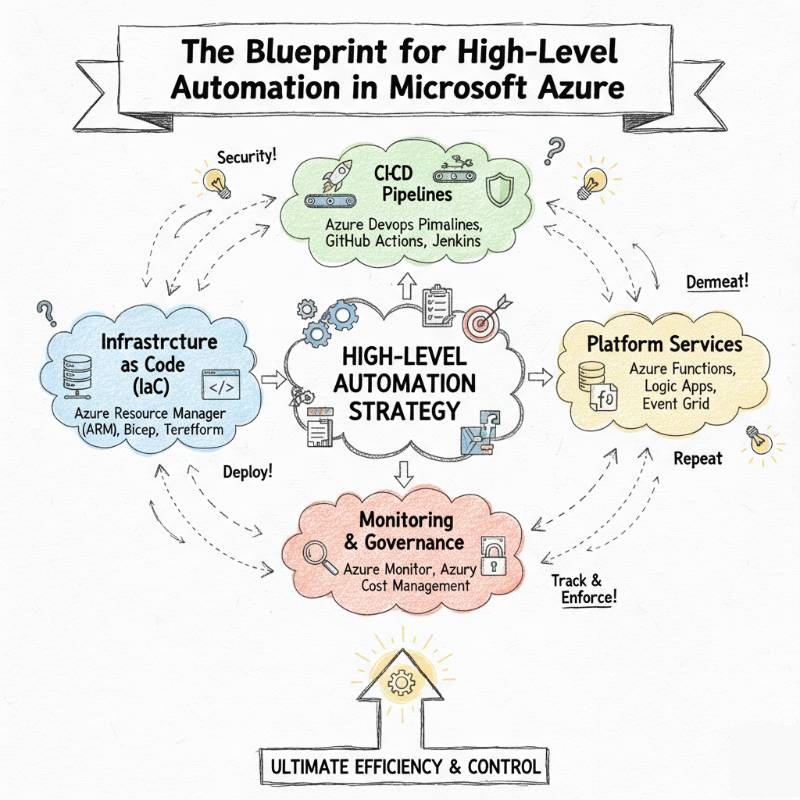
In my many years of navigating the technical landscape, I have observed a significant shift in how we approach the delivery of software. We have moved away from the days where development and operations were separate islands. Today, the most successful organizations are those that have built a bridge between these two worlds. This is exactly what the Azure DevOps Engineer Expert (AZ-400) certification represents. It is not just a test of your technical ability; it is a validation of your capacity to lead a modern engineering culture.
For engineers and managers in India and across the globe, this guide is designed to act as your mentor. I want to help you understand that mastering the AZ-400 is about more than just passing an exam—it is about adopting a mindset of continuous improvement, security, and reliability. Let’s explore how this training can reshape your professional future.
Master Certification Overview
To reach the expert level, you must understand the structure of the path ahead. The AZ-400 is the final step in a journey that begins with a solid foundation in administration or development.
| Track | Level | Who it’s for | Prerequisites | Skills Covered | Recommended Order |
| DevOps | Expert | Senior Engineers & Managers | AZ-104 or AZ-204 | CI/CD, IaC, Feedback, SRE, Security | Take after Associate |
Azure DevOps Engineer Expert (AZ-400) Training
What it is
The Azure DevOps Engineer Expert (AZ-400) training is the highest credential Microsoft offers for professionals in the delivery space. This program focuses on the ability to design and implement a strategy for people, processes, and products. It teaches you how to use Microsoft Azure and GitHub Actions to create a seamless flow of work. Instead of focusing on individual tasks, you learn how to manage the entire lifecycle of an application—from the moment the first line of code is written to its ongoing performance in the cloud.
Who should take it
This training is specifically for working professionals who have already mastered the basics of cloud services. If you are a software engineer who wants to move into technical leadership, a system admin who wants to master automation, or an engineering manager who needs to oversee complex delivery teams, this is your next step. It is built for those who want to be the authoritative voice in their organization regarding how software is built, secured, and shipped.
Skills you’ll gain
Completing this training will give you a level of technical depth that is highly sought after by global companies. You will move from being someone who implements tasks to someone who designs systems.
- Advanced Strategy Design: Learn how to select the right branching strategies, source control systems, and deployment methods for different business needs.
- Mastering CI/CD Pipelines: You will gain the ability to build automated pipelines that handle everything from building and testing to security scanning and global deployment.
- Modern Infrastructure Management: Master the use of Bicep, Terraform, and ARM templates to manage your cloud resources as code, ensuring your systems are predictable and repeatable.
- DevSecOps Integration: Learn how to “shift left” by adding security controls directly into your automation, protecting your data and users from the start.
- Continuous Feedback and Monitoring: Understand how to use Azure Monitor and Application Insights to get real-time data on how your systems are performing, allowing you to fix issues proactively.
Real-world projects you should be able to do
The true value of an expert is their ability to solve real problems. After this training, you will be prepared to lead major initiatives that have a direct impact on your company’s success.
- Building an Automated Release Framework: You can design a system that allows your team to deploy updates several times a day with zero downtime, using advanced techniques like Canary or Blue-Green deployments.
- Designing Self-Healing Infrastructure: You will be able to set up automation that detects performance drops or system failures and automatically corrects them without human intervention.
- Implementing Global Governance: Create a system that ensures every resource in your company’s cloud account follows strict security, budget, and naming policies.
- Leading Digital Transformation: Help an organization move from slow, manual release cycles to a fast, automated DevOps culture that can compete on a global scale.
Preparation plan
Success in the AZ-400 requires a plan that respects your busy professional life. I recommend following one of these three paths depending on your current level:
- 7–14 Days (The Expert Sprint): For those who are already building pipelines every day. Spend your time filling the gaps in areas like instrumentation strategy and compliance. Focus on mock exams to get used to the scenario-based questions.
- 30 Days (The Career Track): The most common choice for working engineers. Spend one week on each major domain: Source Control, CI/CD, Infrastructure/Security, and Feedback/Monitoring. Dedicate your weekends to hands-on projects in the Azure portal.
- 60 Days (The Deep Dive): Recommended if you are moving from a developer or admin role into a specialized DevOps role. Spend the first month mastering the associate-level skills and the second month focusing on the strategic and expert-level objectives of the AZ-400.
Common mistakes
Even very senior professionals can make mistakes when approaching this expert level. Here is what I advise you to avoid:
- Focusing Only on Azure DevOps: Remember that GitHub is a major part of this certification. You must be comfortable with GitHub Actions and GitHub Repos to succeed.
- Skipping the “People” Aspect: DevOps is a culture, not just a toolset. Do not ignore the sections on team communication, Agile methodologies, and collaboration strategies.
- Neglecting Hands-On Work: You cannot pass an expert exam by reading books alone. You must build, break, and fix pipelines yourself to understand the nuances of the platform.
- Underestimating Security: Security is no longer a separate team’s job; it is part of yours. Ensure you spend enough time learning how to manage secrets and permissions within your automation.
Best Next Certification After This
Once you have achieved the Azure DevOps Engineer Expert title, you should look to specialize further. The global market values professionals who have a deep focus in one of the emerging “Ops” fields.
- DevSecOps Certified Professional (DSOCP): This is the natural progression if you want to become the security champion for your organization.
- SRE Certified Professional (SRECP): Perfect for those who want to focus on the technical engineering of reliability and uptime for global systems.
- Master in DevOps Engineering (MDE): A high-level program that combines several certifications into a single master-level credential, marking you as a global leader.
Choose Your Path: 6 Specialized Learning Tracks
The AZ-400 is the foundation for several different career directions. You can choose the path that best aligns with your professional interests:
- DevOps Path: Focuses on the overall speed, quality, and culture of software delivery within an organization.
- DevSecOps Path: Focuses on the intersection of security and automation, ensuring every pipeline is safe by design.
- SRE Path: Focuses on using software engineering to solve operations problems and maintain perfect system reliability.
- AIOps / MLOps Path: The future of technology—automating the lifecycle of Artificial Intelligence and Machine Learning systems.
- DataOps Path: Applying DevOps principles to the management and delivery of data pipelines and big data projects.
- FinOps Path: A vital new field focused on the financial management and cost optimization of cloud resources.
Role → Recommended Certifications Mapping
Depending on your current job or where you want to be in the next few years, here is how you should plan your training:
- DevOps Engineer: AZ-400 + Docker/Kubernetes Certification + Terraform Associate.
- SRE (Site Reliability Engineer): AZ-400 + SRE Certified Professional + Advanced Observability Tools.
- Platform Engineer: AZ-400 + Certified Kubernetes Administrator (CKA) + Cloud Networking.
- Cloud Engineer: AZ-104 + AZ-400 + Cloud Architecture Specialist.
- Security Engineer: AZ-400 + DevSecOps Certified Professional + Azure Security Engineer.
- Data Engineer: AZ-400 + DataOps Certified Professional + Azure Data Engineer.
- FinOps Practitioner: AZ-900 + AZ-400 + FinOps Certified Professional.
- Engineering Manager: AZ-400 + DevOps Leader Certification + Modern Leadership Programs.
Why Choose DevOpsSchool?
Choosing the right place to train is just as important as the certificate itself. You need a partner that understands the real-world pressure of an engineering role.
- Expert Mentorship: Our trainers are not just teachers; they are practitioners who have spent their careers in the industry. They share the practical wisdom you won’t find in a manual.
- Hands-On Experience: We focus on the “doing.” Our labs are designed to give you the experience needed to lead real projects with confidence.
- Current and Relevant: The tech world changes fast. We keep our curriculum updated with the latest features from Microsoft and GitHub, ensuring you are always learning the most relevant skills.
- Career Growth Support: We help you understand how to translate your new skills into better roles and higher leadership positions within the global tech market.
Testimonials
“The AZ-400 training was a turning point in my career. I stopped just implementing tasks and started designing real delivery strategies.” — Rohan
“The hands-on focus on security was exactly what our team needed. I can now lead our DevSecOps initiatives with confidence.” — Sneha
“The mentorship I received helped me move from a senior developer role to a technical lead position in months.” — Amit
Next Certifications to Take
After you finish your Azure DevOps Expert training, it is important to diversify your knowledge. According to the latest data from GurukulGalaxy, here are three directions you can take:
- Same Track (Deep Technical): Get certified in Kubernetes (CKA). It is the gold standard for container orchestration and is used alongside Azure DevOps by almost every major company.
- Cross-Track (Multi-Cloud): Consider the AWS Certified DevOps Engineer – Professional. Mastering both major cloud providers makes you an extremely rare and valuable asset in the global market.
- Leadership (Management): If you are moving into senior management, look into the Certified DevOps Leader (CDL) or PMP to help you lead the human side of technical change.
Top Training Institutions for Azure DevOps (AZ-400)
When you are ready to invest in your future, these institutions provide the most comprehensive and high-quality training available today:
- DevOpsSchool: A global leader in DevOps education, known for its deep focus on real-world projects and expert mentorship. This is the premier choice for those who want to be practitioners, not just certificate holders.
- Cotocus: Excellent for professionals who need a mix of technical workshops and strategic consulting to improve their career trajectory.
- Scmgalaxy: A massive resource for the engineering community, providing structured training paths and a huge wealth of information on all things “Ops.”
- BestDevOps: Focuses on simplified, career-oriented training that helps engineers quickly transition into high-paying DevOps roles.
- DevSecOpsSchool: The authority on bringing security into the automation lifecycle. This is the place to go if you want to specialize in safety.
- SRESchool: Dedicated entirely to the science of Site Reliability Engineering, helping you build systems that never fail.
- AIOpsSchool: Helping engineers prepare for the next generation of operations driven by AI and Machine Learning.
- DataOpsSchool: A specialized center for bringing the speed and reliability of DevOps to the world of big data.
- FinOpsSchool: The leading institution for learning how to manage the cost and financial health of your cloud environment.
FAQs on Azure DevOps Engineer Expert (AZ-400) Training
1. How difficult is the AZ-400 exam compared to the associate level?
It is significantly more difficult because it moves away from “what is this tool” and asks “how would you solve this business problem.” It requires a deep understanding of strategy and integration.
2. How much time should I spend on labs each week?
I recommend spending at least 50% of your study time in the lab. If you study for 10 hours a week, 5 should be spent building and testing pipelines in the Azure portal.
3. Is coding a major part of the exam?
You don’t need to be a full-stack developer, but you must be comfortable with scripts. You will use YAML for pipelines and PowerShell or Bash for automation tasks.
4. What are the mandatory prerequisites?
To earn the expert title, you must first pass either the AZ-104 (Administrator) or AZ-204 (Developer) exam. You can take the AZ-400 first, but you won’t get the title until the prerequisite is met.
5. How long is the training session?
Most instructor-led programs are around 40 hours. However, you should plan for another 4-6 weeks of self-study to be fully prepared for the exam.
6. Is this certification recognized internationally?
Yes. Microsoft certifications are a global standard and are respected by employers in every major tech hub in the world.
7. How do I keep my certification active?
Microsoft certifications are valid for one year. You can renew them for free every year by taking a simple online assessment on the Microsoft Learn website.
8. Can a manager benefit from this technical training?
Absolutely. It gives managers the technical depth needed to make better decisions, hire the right talent, and lead digital transformation projects effectively.
9. What are the key tools covered in the training?
You will master Azure DevOps Services (Boards, Repos, Pipelines, Test Plans, and Artifacts), GitHub, Docker, Kubernetes, and IaC tools like Terraform.
10. Is the “Master in Azure DevOps” different from the AZ-400?
The AZ-400 is the official Microsoft exam. A “Master” program usually includes the AZ-400 as a base but adds much more real-world project work and advanced management training.
11. What is the best sequence for a software engineer?
The most effective path is: AZ-900 (Fundamentals) -> AZ-204 (Developer) -> AZ-400 (DevOps Expert).
12. Does the training cover both GitHub and Azure Pipelines?
Yes, both are core parts of the modern curriculum. You must know how to build and manage delivery pipelines in both environments.
FAQs (Specific to AZ-400 Technical Depth)
1. How much focus is on security in the AZ-400?
Security is a major pillar of the exam. You will be tested on your ability to manage secrets, scan for vulnerabilities, and implement compliance as code.
2. What is “Instrumentation Strategy” in the context of this exam?
It refers to how you set up logging, monitoring, and tracing in your application so you can catch and fix bugs before your users do.
3. Are there case studies in the exam?
Yes, the exam often includes detailed case studies where you are given a company’s current situation and asked to design a DevOps strategy for them.
4. Why is branching strategy important in the AZ-400?
Managing code in a large team is difficult. The exam tests if you know how to use Git branching strategies (like GitFlow or Trunk-based) to keep work moving smoothly.
5. Is Agile and Scrum covered in the training?
Yes. Understanding how to manage a project using Agile, Scrum, and Kanban inside Azure Boards is essential for any DevOps Expert.
6. What is the pass mark for the exam?
The passing score is 700. The questions are a mix of multiple-choice, drag-and-drop, and scenario-based tasks.
7. Can I pass if I only have experience with on-premise servers?
It will be difficult. The AZ-400 is a cloud-first certification. You should spend a lot of time in the Azure portal and learning cloud-native tools before taking the test.
8. How often is the exam content updated?
Microsoft updates the exam every few months to keep up with new features in Azure and GitHub, which is why using a current training provider is so important.
Conclusion
Deciding to pursue the Azure DevOps Engineer Expert certification is a significant step in your professional journey. It represents a commitment to technical excellence and a deep understanding of the modern software delivery lifecycle. In my years of observing the industry, I have seen that those who take the time to master these skills are the ones who move into senior leadership roles and have the greatest impact on their organizations. This training gives you the tools to build systems that are fast, secure, and reliable. It is a challenging path, but the rewards—in terms of career growth, salary, and professional respect—are well worth the effort. Now is the time to start, to learn, and to lead the future of engineering.