




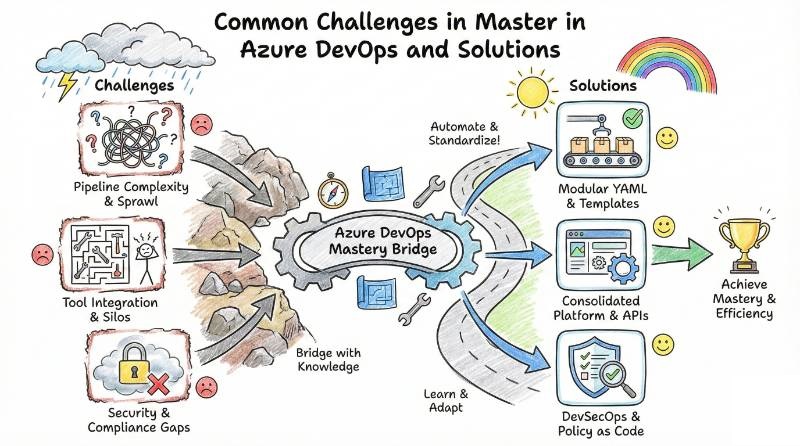
In the ever-evolving world of software development, DevOps has become an essential methodology for ensuring faster and more reliable delivery of applications. As businesses continue to adopt cloud technologies, the demand for professionals skilled in Azure DevOps has risen significantly. Azure DevOps, a set of tools provided by Microsoft, enables the seamless integration of development and operations teams, helping automate and streamline the software development lifecycle.
The Master in Azure DevOps certification equips professionals with the necessary skills to implement these practices using Microsoft’s Azure cloud platform. This comprehensive guide will provide all the essential information you need to understand what the Master in Azure DevOps certification involves, how to prepare for it, and how it can shape your career path.
What is the Master in Azure DevOps Certification?
The Master in Azure DevOps certification is a specialized program designed to teach professionals how to leverage Azure DevOps tools and services to automate workflows and improve software delivery. This certification covers a wide array of topics, including Continuous Integration (CI), Continuous Deployment (CD), infrastructure as code (IaC), automated testing, and agile project management using Azure’s DevOps suite.
This certification provides hands-on experience with tools such as Azure Pipelines, Azure Repos, Azure Boards, and Azure Test Plans. By completing this certification, you will gain the ability to manage end-to-end DevOps pipelines, integrate security measures into the software development lifecycle, and optimize cloud-based workflows.
Who Should Take the Master in Azure DevOps Certification?
The Master in Azure DevOps certification is perfect for:
- DevOps Engineers who want to master Azure’s suite of tools and optimize cloud infrastructure for agile and automated development.
- Software Engineers who wish to learn how to integrate DevOps practices such as CI/CD into their development and deployment workflows.
- Cloud Engineers seeking to combine their cloud expertise with DevOps principles to automate and optimize cloud infrastructure.
- Engineering Managers aiming to lead teams in adopting Azure DevOps practices, ensuring streamlined project management and software delivery.
Skills You Will Gain
Upon earning the Master in Azure DevOps certification, you will have gained proficiency in:
- Azure DevOps Tools: Mastering the use of Azure Pipelines, Azure Repos, Azure Boards, and Azure Test Plans for building and automating pipelines.
- CI/CD Implementation: Implementing and managing continuous integration and deployment pipelines to ensure efficient and rapid software releases.
- Infrastructure as Code (IaC): Automating cloud infrastructure management using Azure Resource Manager (ARM) templates and Terraform.
- Agile Project Management: Using Azure Boards to manage development tasks, backlogs, and sprints, fostering collaboration and transparency among teams.
- Automated Testing: Integrating testing into the DevOps pipeline to improve software quality and reduce the risk of bugs in production.
- Security Integration (DevSecOps): Incorporating security practices throughout the pipeline, ensuring the integrity and safety of applications from development to deployment.
Real-World Projects You Will Be Able to Complete
By the end of the certification program, you’ll be equipped to tackle various real-world projects, such as:
- Building a Full CI/CD Pipeline: Automating the process from code commit to production using Azure DevOps, including testing, building, and deploying.
- Infrastructure Automation: Using IaC tools like ARM templates and Terraform to provision and manage Azure cloud resources automatically.
- DevSecOps Implementation: Integrating security measures like static code analysis and vulnerability scanning into the CI/CD pipeline to ensure secure software delivery.
- Agile Project Management: Creating and managing sprints, tasks, and issues with Azure Boards, ensuring timely delivery of software projects.
- Cloud Monitoring and Optimization: Setting up monitoring and logging to track application performance, quickly identify issues, and optimize the cloud environment.
Preparation Plan
To successfully complete the Master in Azure DevOps certification, the following preparation plans are suggested based on your available study time:
7–14 Days Preparation Plan
- Familiarize Yourself with Azure DevOps Tools: Begin exploring Azure DevOps services like Azure Pipelines, Azure Boards, and Azure Repos. Set up your Azure DevOps account and start working on a basic pipeline.
- Understand CI/CD Fundamentals: Study the principles behind continuous integration and continuous deployment. Set up a simple CI/CD pipeline to automate the build and release process.
- Hands-On Practice: Work on small projects to familiarize yourself with the tools and interface of Azure DevOps.
30 Days Preparation Plan
- Dive Deeper into CI/CD: Understand how to automate testing, version control, and deployment in Azure DevOps. Start building more advanced pipelines with multiple stages.
- Learn Infrastructure as Code (IaC): Gain experience with ARM templates and Terraform for provisioning Azure resources automatically.
- Work on Real-World Projects: Implement full DevOps pipelines and integrate version control, automated testing, and deployment for real applications.
60 Days Preparation Plan
- Master Advanced DevOps Practices: Focus on advanced concepts like DevSecOps, continuous monitoring, and scaling cloud infrastructure.
- Build Complex Projects: Develop an end-to-end solution with automated testing, secure pipelines, and monitoring dashboards.
- Practice for the Exam: Take mock exams, review all study materials, and reinforce your hands-on skills.
Common Mistakes to Avoid
Here are a few mistakes to avoid during your preparation:
- Skipping Version Control: Make sure to have a strong understanding of version control systems like Git and Azure Repos. This is the foundation for building automation in DevOps.
- Neglecting Security: Security should be integrated into every stage of the DevOps lifecycle. Skipping DevSecOps practices can lead to vulnerabilities.
- Not Practicing Enough: DevOps requires hands-on experience. Spend plenty of time working on small projects and real-world scenarios to reinforce what you’ve learned.
- Overlooking Agile Practices: DevOps and Agile go hand in hand. Ensure you are comfortable with Azure Boards for managing agile workflows.
Best Next Certifications After This
Once you’ve completed the Master in Azure DevOps certification, here are the best next certifications to pursue:
- DevOps Engineer Expert (Same Track): Dive deeper into advanced DevOps practices, including automation and cloud integration.
- Certified Kubernetes Administrator (Cross-Track): Kubernetes is essential for managing containerized applications, and this certification will complement your DevOps expertise.
- Certified ScrumMaster (Leadership): Ideal for those looking to manage agile DevOps teams, this certification will improve your leadership skills.
Choose Your Path
After completing the Master in Azure DevOps certification, you can follow one of these learning paths to further specialize:
- DevOps: Strengthen your core knowledge of DevOps principles, automation, and cloud infrastructure.
- DevSecOps: Specialize in integrating security into every stage of the DevOps pipeline.
- SRE (Site Reliability Engineering): Focus on maintaining the reliability, scalability, and performance of production systems.
- AIOps/MLOps: Leverage AI and machine learning to enhance automation and optimization in DevOps workflows.
- DataOps: Apply DevOps principles to streamline and manage data pipelines.
- FinOps: Optimize the financial aspects of cloud infrastructure, ensuring cost efficiency in DevOps processes.
Role → Recommended Certifications
| Role | Recommended Certifications |
|---|---|
| DevOps Engineer | Master in Azure DevOps, Certified Kubernetes Administrator |
| SRE | Master in Azure DevOps, Google Cloud Professional Cloud Architect |
| Platform Engineer | Master in Azure DevOps, AWS Certified DevOps Engineer |
| Cloud Engineer | Master in Azure DevOps, Microsoft Certified: Azure Solutions Architect Expert |
| Security Engineer | Master in Azure DevOps, Certified Information Systems Security Professional (CISSP) |
| Data Engineer | Master in Azure DevOps, Google Cloud Professional Data Engineer |
| FinOps Practitioner | Master in Azure DevOps, Certified Cloud Financial Analyst (CCFA) |
| Engineering Manager | Master in Azure DevOps, Project Management Professional (PMP) |
FAQs Focused on Difficulty, Time, Prerequisites, Sequence, Value, Career Outcomes
- How difficult is the Master in Azure DevOps certification?
- The certification is moderately difficult. If you have prior experience with Azure or DevOps, it will be easier. For newcomers, it might take more time to grasp the foundational concepts.
- How much time should I allocate for preparation?
- Depending on your experience, you should plan for anywhere between 30 to 60 days of preparation.
- Are there any prerequisites for this certification?
- While there are no formal prerequisites, a basic understanding of software development, version control, and cloud platforms (preferably Azure) will be helpful.
- How should I sequence my learning for this certification?
- Start with learning the basics of Azure DevOps tools, then move on to CI/CD automation, infrastructure management, and DevSecOps practices.
- What value does the Master in Azure DevOps certification offer?
- It provides in-depth knowledge of Azure’s DevOps tools and cloud services, making you proficient in automating development workflows and cloud resource management, which is highly valued by employers.
- What career opportunities will this certification open?
- This certification can help you transition into roles such as DevOps Engineer, Cloud Engineer, Site Reliability Engineer, or even Engineering Manager, all of which are in high demand in the tech industry.
- Is this certification recognized globally?
- Yes, this certification is recognized by leading tech companies and organizations globally, especially those using Azure for their cloud infrastructure.
- What are the next steps after earning this certification?
- You can pursue advanced certifications in related tracks like DevOps Engineer Expert, Kubernetes, or ScrumMaster for leadership roles.
- How can I improve my chances of passing the certification exam?
- Practice extensively with hands-on labs, study Azure DevOps documentation, and take practice exams to familiarize yourself with the exam format.
- How does the Master in Azure DevOps certification compare to other DevOps certifications?
- It is specifically tailored for professionals working with Azure, making it highly specialized for those using Microsoft’s cloud platform compared to other general DevOps certifications.
- Can this certification help me switch careers to DevOps?
- Yes, it’s an excellent entry point for professionals transitioning into DevOps from roles in software development, systems administration, or cloud infrastructure.
- What resources should I use to prepare for the exam?
- Resources include official Azure documentation, online courses, hands-on labs, and practice exams. Institutions like DevOpsSchool and Scmgalaxy offer specialized training programs for this certification.
FAQs on Master in Azure DevOps
- What topics are covered in the Master in Azure DevOps certification?
- Topics include Azure DevOps tools, CI/CD pipelines, infrastructure automation, security integration (DevSecOps), and project management with Azure Boards.
- How long is the preparation period for this certification?
- It typically takes 30 to 60 days, depending on your prior knowledge and hands-on experience.
- Is this certification suitable for beginners?
- While this certification can be taken by beginners, it’s recommended to have basic knowledge of cloud computing and DevOps principles to get the most out of the course.
- What practical skills will I learn?
- You will learn to automate the entire software delivery pipeline, manage cloud infrastructure, integrate security measures, and track agile projects using Azure DevOps tools.
- What is the job market demand for Azure DevOps professionals?
- The demand for Azure DevOps professionals is growing rapidly, as more companies are adopting Azure cloud technologies for their software and IT infrastructure.
- Can I take this certification online?
- Yes, there are numerous online platforms like DevOpsSchool and BestDevOps that offer this certification training.
- How do I register for the Master in Azure DevOps exam?
- You can register for the exam through Microsoft’s certification portal, where you can choose the appropriate exam for Azure DevOps.
- How can this certification help my career?
- This certification can help you secure roles such as DevOps Engineer, Cloud Engineer, and Site Reliability Engineer, with opportunities for career advancement and salary increases.
Institutions Offering Master in Azure DevOps Training
The Master in Azure DevOps certification is offered by several well-known institutions:
DevOpsSchool
DevOpsSchool is one of the most widely recognized providers for DevOps and cloud certification training. Their Master in Azure DevOps program combines instructor‑led sessions with practical labs, real project scenarios, and industry best practices. DevOpsSchool focuses on end‑to‑end learning — covering CI/CD, automation, infrastructure as code, security (DevSecOps), and agile DevOps workflows using Azure tools.
Cotocus
Cotocus is known for its structured and easy‑to‑follow learning paths that help beginners and experienced professionals alike. Their training includes practical examples, use cases, and hands‑on exercises using Azure Pipelines, Azure Boards, and other DevOps tools. Cotocus emphasizes real‑world project readiness and prepares learners for both certification and job roles.
Scmgalaxy
Scmgalaxy offers a practical, project‑oriented approach to Azure DevOps training. Their courses dive deeply into automation of builds, deployments, and cloud infrastructure using Azure DevOps tools. With live labs and mentor support, Scmgalaxy ensures students gain confidence in real use‑case scenarios, including CI/CD pipeline creation and deployment automation.
BestDevOps
BestDevOps provides a comprehensive training experience with expert instructors, interactive sessions, and hands‑on assignments. The training is designed to cover core Azure DevOps topics such as infrastructure automation, continuous integration, automated testing, and version control. BestDevOps helps learners understand how DevOps principles work in enterprise environments.
DevSecOpsSchool
DevSecOpsSchool specializes in integrating security practices into DevOps pipelines. Their Azure DevOps training includes DevSecOps modules that focus on embedding security testing, vulnerability scanning, and compliance checks into CI/CD workflows. This makes their programs particularly valuable for learners who want to emphasize secure DevOps practices.
SRE School
Focused on Site Reliability Engineering (SRE) principles, SRE School offers training that combines reliability, performance monitoring, and automation using Azure DevOps tools. This institution is ideal for professionals looking to blend DevOps and SRE practices — ensuring highly available and stable cloud systems.
AIOpsSchool
AIOpsSchool provides specialized training that integrates artificial intelligence with DevOps operations. Their courses help learners understand how AI‑driven solutions can be applied to DevOps workflows for automation, anomaly detection, and predictive monitoring — all within the Azure ecosystem.
DataOpsSchool
DataOpsSchool is focused on applying DevOps principles to data engineering workflows. Their training helps data engineers build automated data pipelines, manage version control, and use DevOps tools for data lifecycle automation using Azure DevOps.
FinOpsSchool
FinOpsSchool provides training in cloud cost optimization and financial operations within DevOps practices. Their programs help learners understand how to manage cloud spending, optimize resource usage, and implement DevOps processes that balance cost and performance — particularly useful for organizations with high cloud expenditure.
Conclusion
The Master in Azure DevOps certification is a key credential for professionals aiming to advance in DevOps and cloud engineering roles. With its comprehensive coverage of Azure DevOps tools, CI/CD practices, infrastructure automation, and security integration, it provides the expertise required to implement DevOps best practices in cloud environments. Whether you are new to DevOps or looking to enhance your existing skills, this certification opens doors to numerous career opportunities in high-demand roles like DevOps Engineer, Cloud Engineer, and Site Reliability Engineer.