




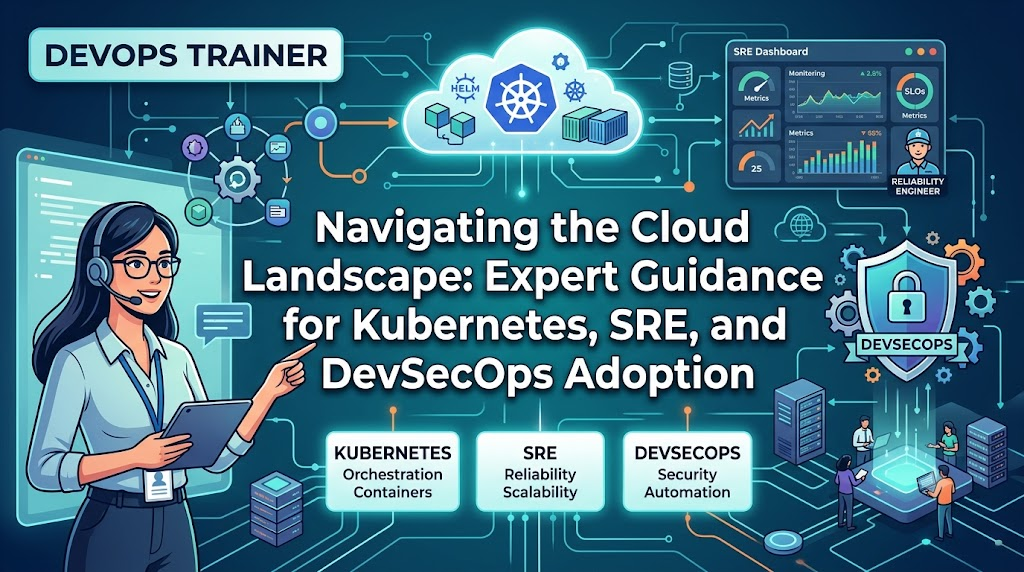
In the modern enterprise, technology is no longer just a support function; it is the core driver of business value. As organizations strive for greater agility, scalability, and security, the adoption of robust engineering practices has shifted from a competitive advantage to a baseline requirement. Navigating this transformation requires more than just tool adoption; it demands a fundamental shift in culture, process, and technical competency. Rajesh Kumar, a seasoned DevOps architect, consultant, and trainer, provides specialized expertise to help organizations bridge the gap between legacy operations and cloud-native excellence at Rajesh kumar. Successfully implementing these practices requires a systematic approach to technical training and architectural consulting that aligns with specific business outcomes.
Understanding Current Enterprise Challenges
Many organizations find themselves stuck in a “DevOps transition phase,” where the adoption of tools has not yielded the promised increases in velocity or reliability. Common obstacles include entrenched cultural silos, significant technical debt, and a lack of unified standards across development and operations teams.
Scalability issues often arise when infrastructure is managed manually rather than through code, leading to configuration drift and inconsistent environments. Security is frequently treated as an afterthought, bolted on at the end of the deployment cycle rather than integrated into the workflow. Furthermore, the rapid evolution of cloud platforms means that engineering teams often struggle to keep pace with new features and best practices, leading to underutilized resources and increased operational complexity. Addressing these challenges requires a strategic overhaul that prioritizes automation, observability, and team empowerment.
Why Skilled DevOps Trainers Matter
Generic training programs often fail because they focus on theoretical concepts in isolation. Real-world engineering requires an understanding of how these tools function within the specific constraints of an enterprise environment. An experienced DevOps trainer brings practical insights that transcend basic command-line tutorials.
By leveraging the guidance of a professional DevOps Consultant, teams can avoid common pitfalls such as over-engineering solutions or creating overly complex CI/CD pipelines that become difficult to maintain. Effective training helps shorten the learning curve, ensuring that engineers are not just using tools but are also internalizing the underlying architectural principles required to build resilient, scalable systems. This mentorship is vital for transforming a standard IT department into a high-functioning engineering organization.
Essential Skills Every Modern DevOps Professional Needs
Building a high-performing team requires a comprehensive mastery of several core domains. Regardless of the specific stack, engineers must be proficient in:
- CI/CD Pipeline Training: Understanding the lifecycle of code, from commit to production, and building automated quality gates.
- Infrastructure as Code (IaC): Using tools like Terraform to treat infrastructure with the same rigor as application code.
- Containers and Orchestration: Mastering Docker and Kubernetes to ensure application portability and consistent runtime environments.
- Cloud Platforms: Deep expertise in cloud-native services, particularly within AWS environments, to optimize cost and performance.
- Monitoring and Observability: Implementing systems that provide deep visibility into application health and performance.
- Security Integration: Embedding DevSecOps practices to identify vulnerabilities early in the software development lifecycle.
- Automation: Reducing manual toil by automating repetitive operational tasks.
Kubernetes Training for Enterprise Teams
Kubernetes has become the de facto standard for container orchestration, but its complexity is often underestimated. Effective Kubernetes training for enterprise teams must go beyond deploying a simple application. It should cover production-readiness factors, including ingress management, network policies, storage classes, and cluster security.
An effective approach focuses on the operational reality of managing clusters at scale. This includes understanding resource management, horizontal pod autoscaling, and implementing robust disaster recovery strategies. By focusing on practical application, teams can minimize downtime and ensure that their Kubernetes infrastructure provides the reliability necessary for business-critical services.
Site Reliability Engineering (SRE) Training
While DevOps provides the cultural framework for collaboration, SRE provides the rigorous engineering approach to reliability. SRE training shifts the focus from managing individual servers to managing system-wide availability.
Key topics include defining Service Level Objectives (SLOs) and Error Budgets, which provide a data-driven framework for balancing the need for new features with the necessity of system stability. Engineers learn how to implement observability patterns that enable proactive incident management and efficient troubleshooting, ensuring that the organization can maintain service guarantees even as the system grows in complexity.
DevSecOps in Modern Organizations
Security in the modern enterprise cannot be a siloed responsibility. DevSecOps represents the integration of security practices into the development and operations workflows. This training focuses on “shifting left,” where security testing occurs during the build and integration phases, rather than waiting for production.
Training programs should cover automated security scanning, container image security, and identity and access management (IAM) best practices. By fostering a security-first mindset, organizations can reduce the risk of vulnerabilities reaching production and ensure compliance with industry standards, all while maintaining the agility of a rapid deployment pipeline.
Platform Engineering and Developer Enablement
The current trend in high-performing engineering organizations is the shift toward Platform Engineering. Instead of requiring developers to become infrastructure experts, platform teams create internal developer platforms (IDP) that provide self-service capabilities.
A Platform Engineering Consultant helps organizations design these interfaces to reduce cognitive load on developers. This approach empowers teams to provision resources, manage deployments, and monitor application health through standardized, compliant templates. This not only increases productivity but also ensures that the organization maintains control over security and architectural standards.
How DevOps Consulting Accelerates Transformation
Training is essential, but it is only one piece of the puzzle. DevOps consulting provides the strategic oversight needed to map these technical skills to business goals. An expert consultant performs comprehensive assessments of existing workflows, identifies bottlenecks, and helps leadership create a roadmap for transformation.
This includes selecting the right toolchains, establishing governance models, and fostering a culture of continuous improvement. Whether it is an AWS DevOps Consultant evaluating cloud architecture or a specialist in GitOps training implementing declarative infrastructure management, the goal is to align engineering practices with long-term business strategy.
Suggested Learning Paths for Different Roles
A one-size-fits-all training approach rarely works. Different roles require different focus areas:
- Developers: Focus on CI/CD pipeline integration, containerization, and understanding the infrastructure constraints of their applications.
- Operations Engineers: Focus on Kubernetes administration, IaC (Terraform), and advanced automation techniques.
- Architects: Focus on system design, cloud-native architecture, service mesh, and scaling strategies.
- Security Professionals: Focus on integrating security testing into CI/CD pipelines and DevSecOps tooling.
- Engineering Managers: Focus on metrics, team enablement, culture, and ROI of DevOps initiatives.
Practical Recommendations for Organizations
To successfully implement a DevOps transformation, organizations should focus on the following:
- Define Clear Success Metrics: Establish what “good” looks like in terms of deployment frequency, lead time for changes, and mean time to recovery (MTTR).
- Invest in Hands-On Learning: Theory is helpful, but mastery comes from working on real-world, production-like scenarios under the guidance of an experienced DevOps Trainer.
- Start Small: Focus on transforming one high-impact project or team before attempting a broad organizational rollout.
- Promote a Blameless Culture: Encourage post-mortems and a learning-focused environment where failures are viewed as opportunities for system improvement.
- Standardize Tooling: Avoid “tool sprawl” by establishing a set of core approved technologies for infrastructure, CI/CD, and monitoring.
Frequently Asked Questions
1. How do we measure the ROI of corporate training? ROI is measured by tracking operational improvements: reduced incident counts, faster onboarding of new engineers, improved deployment frequency, and reduced time spent on manual toil.
2. Is GitOps suitable for legacy environments? While GitOps is cloud-native, its principles of declarative configuration and version control can be adapted to legacy systems to improve consistency and auditability, though it often requires a phased transition.
3. How do you balance Kubernetes complexity with business agility? The key is abstraction. By utilizing Platform Engineering, you can provide developers with simple, self-service interfaces, hiding the underlying complexity of Kubernetes while maintaining the benefits of the platform.
4. What is the biggest hurdle when implementing DevSecOps? Cultural resistance is often the biggest hurdle. Transitioning from a gatekeeper security model to an integrated, shared-responsibility model requires clear communication and strong executive support.
5. How often should training programs be updated? In the fast-moving DevOps space, core curricula should be reviewed and updated every six to twelve months to reflect changes in tooling, security practices, and cloud-native standards.
6. Can Platform Engineering replace traditional DevOps teams? Platform Engineering is an evolution of DevOps. It doesn’t replace it but rather formalizes the internal customer-provider relationship between infrastructure teams and developers to increase efficiency.
7. What distinguishes a theoretical trainer from an experienced consultant? A consultant applies knowledge to the specific constraints and business goals of your environment, whereas a trainer often delivers standardized content. An ideal expert, like a professional DevOps Trainer in India, does both.
8. How do we maintain reliability during cloud migration? Reliability is maintained by implementing robust observability before the migration begins and using “canary” deployment strategies to validate performance in the new environment gradually.
9. How does SRE differ from traditional operations? SRE applies software engineering mindsets to operational problems, focusing on automation and data-driven reliability targets rather than manual, reactive troubleshooting.
10. What is the ideal timeline for a DevOps transformation? Transformation is a continuous journey. While foundational changes can be implemented in 3–6 months, achieving high-performance status is an iterative process that evolves with the organization.
Conclusion
The path to building a high-performing engineering organization is paved with continuous learning, strategic planning, and hands-on expertise. Whether you are looking for Docker Kubernetes Training, SRE coaching, or a broad DevOps transformation roadmap, the focus must remain on solving real-world problems. By partnering with a qualified expert and investing in the right training, organizations can build the capabilities necessary to innovate faster, scale more reliably, and foster a culture of engineering excellence. Engineering teams today need the right guidance to move beyond the tools and unlock the true potential of modern, cloud-native architecture.