




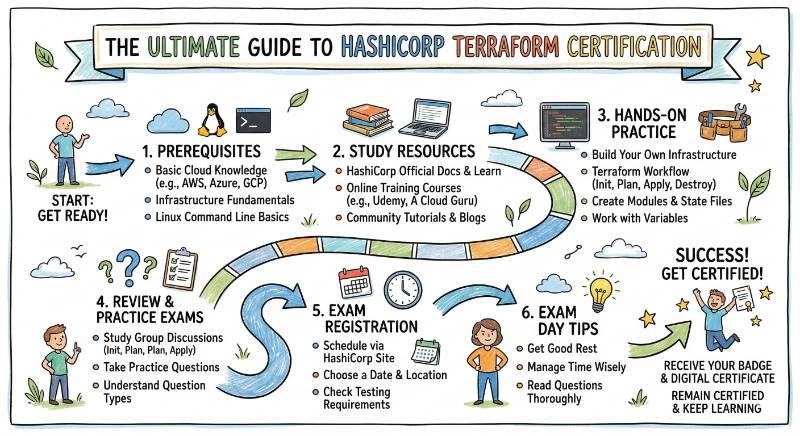
Hashicorp Terraform is defined as a foundational tool for orchestrating cloud environments through code. It is categorized as Infrastructure as Code (IaC) software, enabling the creation and modification of resources across multiple providers with a single, unified language. Instead of manual intervention, the desired state of a system is written in text files, which are then used by the tool to build and maintain the infrastructure automatically.
The Role of Automation in Modern Engineering
The shift toward automated environments is recognized as a necessary evolution for technical teams. It is observed that manual configuration often leads to inconsistencies and slow deployment cycles. By adopting an automated approach, every piece of infrastructure is documented, versioned, and easily repeatable. This ensures that the gap between development and production is minimized, creating a more stable environment for software delivery.
For engineers and managers, understanding these principles is identified as a critical requirement for career advancement. It allows for the management of vast, complex networks with minimal effort and high precision. As organizations move toward the cloud, the ability to define infrastructure through code is seen as the primary way to achieve operational excellence and reliability.
Integration with Observability Engineering
Building infrastructure is only one part of the lifecycle; the other part is understanding its behavior. The Master in Observability Engineering Certifications Program is designed to teach the skills needed to gain deep visibility into automated systems. While Terraform is used to provision the environment, observability tools are used to monitor its health and performance.
Through this program, expertise is gained in managing metrics, logs, and distributed traces. It is acknowledged that a system cannot be fully managed if it cannot be observed. By combining automation training with observability certification, a comprehensive understanding of system architecture is achieved. This integrated approach is essential for maintaining high availability in production environments.
Certification Comparison Overview
A clear understanding of the available certification paths is provided in the table below.
| Track | Level | Who it’s for | Prerequisites | Skills covered | Recommended order |
| Infrastructure Automation | Associate | Engineers & Managers | Basic Cloud Knowledge | CLI, State Management, Modules, Providers | 1st Step |
Hashicorp Certified Terraform Associate
What it is
The Hashicorp Certified Terraform Associate is a professional credential that validates an individual’s knowledge of basic infrastructure automation features. It is focused on the open-source version of the tool and confirms that a candidate understands the core workflow and syntax needed to manage resources effectively.
Who should take it
This certification is intended for software engineers, systems administrators, and DevOps professionals. It is also beneficial for managers who oversee cloud projects and need a technical perspective on how automation is implemented. It serves as an entry point for anyone looking to specialize in platform or cloud engineering.
Skills you’ll gain
Comprehensive skills in managing the lifecycle of resources are developed. The ability to handle state files and organize code into reusable components is mastered.
- Proficiency in the HashiCorp Configuration Language (HCL) is developed.
- Management of environment-specific states is learned.
- Techniques for using modules to organize code are mastered.
- Knowledge of interacting with various cloud APIs is gained.
- Mastery over core command-line functions is achieved.
Real-world projects you should be able to do
After the training is completed, several production-level tasks can be handled. These projects demonstrate the practical application of the learned skills.
- A multi-tier network with subnets and security groups is deployed using scripts.
- Automated provisioning of highly available web application clusters is achieved.
- Integration of infrastructure code into continuous delivery pipelines is managed.
- Multi-cloud resource management using shared modules is implemented.
Preparation plan
A structured study schedule is recommended to ensure success.
- 7–14 days: This fast-track plan is suitable for those with existing hands-on experience. Documentation is reviewed, and specific exam objectives are studied.
- 30 days: This standard plan involves a mix of reading and daily lab practice. Time is split between understanding theory and writing code.
- 60 days: This plan is recommended for beginners. The first month is spent on general cloud concepts, while the second month focuses on automation logic and syntax.
Common mistakes
Frequent errors are identified that can be avoided with proper study.
- The significance of state file security and management is often overlooked.
- Hardcoding values instead of using dynamic variables is a common mistake.
- The difference between various command flags is sometimes misunderstood.
- Overly complex configurations are used where simpler solutions would be more effective.
Choose Your Path: 6 Learning Journeys
Career progression is achieved by focusing on specific domains of interest:
- DevOps Path: Focus is placed on automating the entire software delivery lifecycle.
- DevSecOps Path: Security policies are integrated directly into the infrastructure code.
- SRE Path: The primary goal is building reliable systems that can handle failures.
- AIOps/MLOps Path: Environments for artificial intelligence models are managed through automation.
- DataOps Path: Large-scale data processing systems are automated and managed.
- FinOps Path: Automation is used to monitor and optimize cloud spending.
Role-Based Certification Mapping
Specific paths are suggested based on professional roles:
- DevOps Engineer: Terraform Associate + Kubernetes Admin.
- SRE: Terraform Associate + Master in Observability.
- Platform Engineer: Terraform Associate + Multi-cloud Professional.
- Cloud Engineer: Terraform Associate + Solutions Architect.
- Security Engineer: Terraform Associate + Hashicorp Vault.
- Data Engineer: Terraform Associate + Data Ops Specialist.
- FinOps Practitioner: Terraform Associate + Cloud Financial Mgmt.
- Engineering Manager: Terraform Associate + Digital Leadership.
Why Choose DevOpsSchool?
DevOpsSchool is recognized for providing high-quality training that is focused on real-world application. The curriculum is designed to move beyond theory, ensuring that every student gains practical experience in a lab setting. The support provided by experienced mentors helps in overcoming technical challenges quickly.
The programs offered are tailored to the needs of the current job market. By choosing this institution, access is gained to a wealth of resources and a community of professionals. This ensures that learners are well-prepared for both the certification exam and the demands of a professional engineering role.
Next Certifications to Take
After the primary certification is earned, three directions for growth are recommended:
- Same Track: Specialize further in the Hashicorp ecosystem, such as security automation.
- Cross-Track: Expand into container management with Kubernetes.
- Leadership: Pursue architectural or strategic management certifications.
Top Institutions Providing Training and Certification
A wide range of technical programs is offered here, with an emphasis on hands-on practice. The courses are designed to help students transition into senior engineering roles by focusing on complex, real-world scenarios.
Cotocus
This institution is known for its focused workshops and corporate training solutions. They provide specialized sessions that help teams adopt modern automation practices quickly and efficiently.
Scmgalaxy
A large library of tutorials and documentation is provided by this platform. It serves as a major resource for engineers looking to stay updated on the latest trends in infrastructure and automation.
BestDevOps
Rigorous training schedules and project-based learning are the focus here. The institution is dedicated to helping professionals achieve their career goals through intensive study.
DevSecOpsSchool
The integration of security into every phase of the development cycle is taught at this school. Students learn how to build automated systems that are inherently safe and compliant.
Sreschool
Reliability and performance are the core focus of the programs offered. Engineers are taught how to use automation to improve system uptime and manage large-scale deployments.
Aiopsschool
This institution prepares learners for the intersection of artificial intelligence and operations. Training is provided on how to automate the complex infrastructure needed for AI projects.
Dataopsschool
Specialized courses are offered for managing data infrastructure through code. It is an ideal choice for data professionals looking to improve their automation skills.
Finopsschool
The financial management of cloud resources is the primary focus here. Professionals are taught how to balance technical performance with cost-efficiency.
FAQs (Career & Technical Focus)
1. Is the certification exam considered difficult?
It is a professional-level exam that requires a solid understanding of both theory and command-line usage.
2. How long does it take to prepare?
Most working professionals find that 30 to 45 days of consistent study is sufficient.
3. Are there prerequisites for the exam?
No formal prerequisites exist, but a basic understanding of cloud services is highly recommended.
4. In what order should certifications be taken?
Starting with the Terraform Associate is recommended before moving on to specialized tracks.
5. What is the value of this certification?
It is highly valued as a proof of competence in modern infrastructure automation.
6. What career growth can be expected?
Opportunities for senior and specialized roles in cloud engineering are often increased.
7. Can the exam be passed without lab practice?
It is very difficult, as many questions are based on actual tool behavior in a terminal.
8. How long is the certification valid?
It is typically valid for two years, after which recertification is encouraged.
9. How does this tool compare to others?
It is unique because it works across many different cloud providers with a single language.
10. Is programming knowledge required?
Basic logic is helpful, but the language is designed to be accessible to all IT professionals.
11. How is observability connected?
It provides the necessary monitoring for systems that have been built through automation.
12. Can managers benefit from this training?
Yes, it provides the technical context needed to lead teams and manage project timelines effectively.
FAQs on Hashicorp Terraform Training & Certification Program
1. Where is the official link for the course?
Details can be found at the official certification page.
2. What is the format of the exam?
The exam consists of multiple-choice and true/false questions in an online proctored environment.
3. Is lab access provided?
Yes, reputable providers like the ones listed above include lab environments for practice.
4. Can the exam be taken in India?
Yes, it is available globally as an online proctored test.
5. What is the passing score?
A score of approximately 70% is generally required to pass.
6. Is there a retake policy?
Yes, a retake can be scheduled after a waiting period and payment of the fee.
7. Are these certifications recognized globally?
Yes, they are recognized by major technology companies worldwide.
8. Will this help in technical interviews?
The practical knowledge gained is directly applicable to technical screening questions.
Testimonials
“The training provided a clear path to understanding automation. The labs were essential for grasping the technical details.” – Anil
“A very well-structured program that covers everything needed for the exam. The mentors were helpful throughout the process.” – Megha
“The best investment for career growth. The certification has opened many new doors in the field of cloud engineering.” – Vikram
Conclusion
The journey toward mastering infrastructure automation is seen as a transformative step for any technology professional. It is observed that as the industry continues to evolve, the reliance on manual processes is disappearing. By achieving a professional certification in Hashicorp Terraform, individuals are equipped with the skills needed to build and manage the complex environments of the future. This guide has outlined the path from foundational understanding to specialized career tracks, emphasizing the importance of both automation and observability. It is encouraged that every engineer and manager continues to invest in these skills to remain competitive and impactful. Through dedicated study and practical application, a high level of proficiency can be reached, leading to a long and successful career in modern IT operations.