




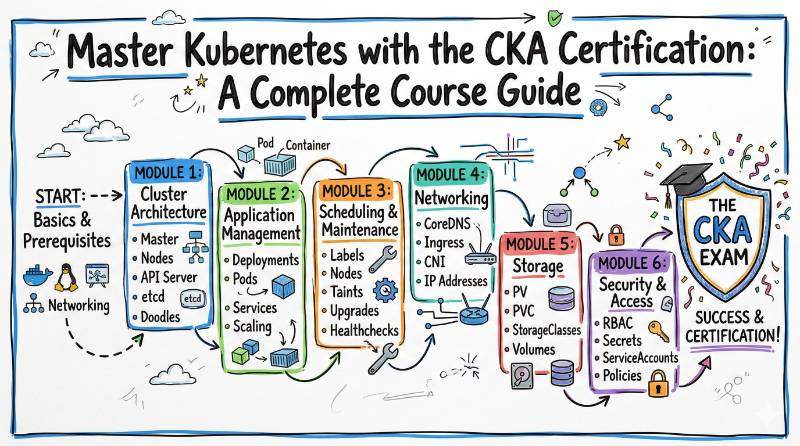
The way we build and run software has changed completely. Years ago, we worked with physical machines and thick cables. Today, everything lives in the cloud inside small containers. If you work in IT, you have seen how Kubernetes has become the main tool for managing these containers. It is the engine that keeps modern businesses running.
For any engineer or manager, especially those working in India or for global companies, knowing Kubernetes is now a basic requirement. It is not just about reading a book; it is about proving you can handle a real system. That is why the Certified Kubernetes Administrator (CKA) Certification Training Course is so important. It shows the world you have real, hands-on skills.
I have spent a long time watching tools come and go. Kubernetes is different because it has become the foundation for everything else. In this guide, I will show you how this certification fits into your career and how you can master it.
The Landscape of Professional IT Certifications
Before you start with one course, you should see the whole map. There are many paths you can take in tech today. Some people focus on speed, while others focus on security or saving money.
The table below shows how the Certified Kubernetes Administrator (CKA) Certification Training Course fits with other major tracks. Use this to plan where you want to go next.
Master Certification Overview Table
| Certification Name | Track | Level | Who it’s for | Prerequisites | Skills Covered | Recommended Order |
| Certified Kubernetes Administrator (CKA) | Kubernetes | Associate | SysAdmins, DevOps, SREs | Basic Linux & Containers | Cluster Setup, Networking, Storage, Troubleshooting | Start Here |
| Certified Kubernetes Application Developer (CKAD) | DevOps | Associate | Software Engineers | K8s Basics | Deploying and managing apps | Second Step |
| Certified Kubernetes Security Specialist (CKS) | DevSecOps | Advanced | Security Engineers | Must have CKA | Cluster Hardening, Security Audits | After CKA |
| SRE Certified Professional | SRE | Professional | SREs, Ops Leads | Ops Experience | Reliability, SLOs, Error Budgets | After CKA |
| MLOps Certified Professional | AIOps | Advanced | ML Engineers | Python, ML basics | Scaling AI models | Specialized |
| DataOps Certified Professional | DataOps | Intermediate | Data Engineers | Data Basics | Managing data flows | Specialized |
| FinOps Certified Practitioner | FinOps | Professional | Managers, Cloud Leads | Cloud Basics | Cloud Cost Control | Management Track |
Deep Dive: Certified Kubernetes Administrator (CKA)
The Certified Kubernetes Administrator (CKA) Certification Training Course is special because it is not a written test with multiple choices. It is a practical exam. You have to prove you can do the work. When I hire people, I value the CKA because it shows the person can use the command line to fix real problems.
What it is
The Certified Kubernetes Administrator (CKA) Certification Training Course is a hands-on program. It teaches you how to build, set up, and manage Kubernetes clusters that are ready for real work. During the exam, you are given a live terminal and a list of tasks. You might have to fix a broken node or set up a network. It is the best way to prove you are a true administrator.
Who should take it
This course is for anyone who is responsible for keeping systems online and running well.
- Working Engineers: Those who currently manage servers and want to move into cloud roles.
- Software Engineers: Developers who want to see how their code is actually deployed and run.
- Engineering Managers: Leaders who need to understand the technical details to help their teams make better plans.
- Platform Engineers: Those who build the tools that other developers in the company use.
Skills you’ll gain
When you finish this training, you will have a deep understanding of how Kubernetes works. You will learn how to talk to the system using the command line and how to automate difficult tasks.
- Cluster Building: You will learn how to use tools like
kubeadmto build a cluster from scratch. - Managing Networking: You will understand how pods talk to each other and how to let users reach your apps.
- Storage Management: You will learn how to give your applications “memory” so data isn’t lost when they restart.
- Security & RBAC: You will learn how to lock down the cluster so only the right people can make changes.
- Expert Troubleshooting: You will gain the skills to find out why a cluster is slow or why an app won’t start.
Real-world projects you should be able to do
After this training, you will be ready to handle big tasks at your job. These are the kinds of skills that make an engineer very valuable to a company.
- Production Cluster Setup: You will be able to design and build a cluster that can handle many users without crashing.
- Multi-Team Isolation: You can set up “Namespaces” so different teams can work in the same cluster without getting in each other’s way.
- Automated Disaster Recovery: You will know how to back up the cluster’s data and restore it quickly if something breaks.
- Traffic Control: You can set up “Ingress” rules to manage how web traffic reaches different parts of your software.
Preparation plan (7–14 days / 30 days / 60 days)
How much time you need depends on what you already know. Here is a simple guide to help you plan your study time.
- 7–14 Days (The Expert Sprint): This is for people who use Kubernetes every day. Spend your time on timed labs. Focus on things you don’t do often, like upgrading the cluster or backing up the database.
- 30 Days (The Standard Path): This is the best choice for most working engineers. Spend the first two weeks learning the basics. Spend the next two weeks practicing labs and taking mock exams.
- 60 Days (The Deep Study): If you are new to containers and Linux, take your time. Spend the first month learning how Linux works and how to use Docker. Spend the second month following the Kubernetes training plan.
Common mistakes
I have seen many people fail because they were not ready for how the exam works. It is not just about what you know; it is about using your time well.
- Typing everything by hand: You don’t have time to write every file from scratch. You must learn to use “short” commands to create your files quickly.
- Working in the wrong place: The exam has different clusters. Always check which one you are in before you run a command.
- Getting stuck on one problem: If a task is too hard, skip it and go to the next one. You can come back to it later if you have time.
- Not using the documentation: You are allowed to use the official Kubernetes website. Learn how to find things there fast so you don’t waste time searching.
Strategic Career Pathing
Getting your CKA is a big step, but you should always think about what comes next. The tech world is always moving, and you want to stay ahead.
Best next certification after this
Once you have your CKA, you have three main paths to consider:
- Same track (Technical Depth): Certified Kubernetes Security Specialist (CKS). This is the best follow-up because it teaches you how to keep your clusters safe.
- Cross-track (Development): Certified Kubernetes Application Developer (CKAD). This helps you understand the developer side of things.
- Leadership (Management): FinOps Certified Practitioner. This is for people moving into management who need to control cloud costs.
Choose your path (6 Learning Paths)
- DevOps Path: Focus on the speed of building and releasing software.
- DevSecOps Path: Focus on making security a part of every step of the work.
- SRE Path: Focus on making sure systems are reliable and always online.
- AIOps/MLOps Path: Learn how to run and manage large AI models on Kubernetes.
- DataOps Path: Focus on how data flows through a company safely and quickly.
- FinOps Path: Learn how to manage the cost of the cloud and save money.
Role → Recommended certifications mapping
- DevOps Engineer: CKA, Certified DevOps Engineer, Terraform training.
- SRE: CKA, CKS, SRE Certified Professional.
- Platform Engineer: CKA, CKS, CKAD.
- Cloud Engineer: CKA, Solutions Architect Associate.
- Security Engineer: CKS, DevSecOps Professional.
- Data Engineer: DataOps Professional, CKA.
- FinOps Practitioner: FinOps Practitioner, CKA.
- Engineering Manager: FinOps Practitioner, SRE Foundation.
Top Training Institutions for CKA
Choosing the right place to learn is very important. You need a school that provides real labs and teachers who have done the work. Here are the top places that can help you.
- DevOpsSchool: This is a top place to learn. They offer deep training that is very practical. Their courses help you pass the exam and give you skills for a real job. They focus a lot on hands-on labs.
- Cotocus: This school is known for high-quality technical training. They provide detailed sessions that cover complex setups, making them a great choice for experienced engineers.
- Scmgalaxy: They have a large community and provide many resources for learning. Their training is built around the modern software lifecycle and focuses on automation.
- BestDevOps: This school aims to make learning simple and effective. They focus on the most important skills you need to become a professional in a short amount of time.
- devsecopsschool: If you want to learn with a focus on security, this is the place. They put security into every part of the Kubernetes training.
- sreschool: This school focuses on reliability. They teach you how to manage clusters so they stay online even when things go wrong.
- aiopsschool: Great for those moving into the AI space. They show you how to use Kubernetes to power big machine learning projects.
- dataopsschool: They specialize in data-heavy systems. Their course shows you how to manage clusters that handle massive amounts of data.
- finopsschool: This is for the business side of tech. They help you run Kubernetes while keeping your cloud bills low.
FAQs (General Career & Outcomes)
1. Is the CKA certification still valuable?
Yes, it is more valuable than ever. Most big companies now use Kubernetes and need certified people to manage it.
2. How long does the CKA certification last?
It is valid for three years. This makes sure you stay up to date with the newest features.
3. Do I need to be an expert in coding?
No, but you do need to be comfortable with the Linux command line. You don’t need to write apps, but you need to know how they run.
4. Can I take the exam from home?
Yes, the exam is done online. You can take it from anywhere if you have good internet and a quiet room.
5. How much does the CKA exam cost?
The standard price is around $395, but you can often get it for less if you buy it with a training course.
6. What is the difference between CKA and CKAD?
CKA is for people who manage the cluster itself. CKAD is for developers who build apps that run on the cluster.
7. Does CKA help with salary growth?
Yes. Certified engineers often earn more because they have proven they have a specialized and difficult skill.
8. Is there a specific order for these certifications?
Most people start with the CKA because it gives the best overall understanding of how everything works.
9. Can I use Google during the test?
No, you are only allowed to use the official Kubernetes documentation website.
10. What happens if I fail the first time?
Most exam vouchers include one free retake, so you can learn from your mistakes and try again.
11. How much hands-on practice do I need?
You should spend at least 40 to 60 hours doing labs to feel ready for the exam.
12. Will this help me get an SRE role?
Yes. CKA is a basic requirement for almost every Site Reliability Engineering job today.
FAQs (Specific to CKA Training)
1. What version of Kubernetes is used in the training?
The training follows the most recent stable release, which is what the exam uses too.
2. What is the format of the CKA exam?
It is 100% practical. There are no multiple-choice questions. You have to solve problems in a terminal.
3. How long is the CKA exam?
You have exactly two hours to finish all the tasks. This is why being fast is very important.
4. What is a passing score for the CKA?
You need to score 66% or higher to get your certification.
5. Are there any prerequisites for the training?
You should know basic Linux commands and what containers are before you start.
6. Does the training cover etcd backup and restore?
Yes, this is a very important part of the course and a common task in the real exam.
7. Do I need to learn Helm for the CKA?
Basic Helm knowledge is now part of the exam, so the training will cover how to use it.
8. Can I use my own notes during the exam?
No, you are only allowed to use the official documentation. You cannot have any papers or notes with you.
Conclusion
The Certified Kubernetes Administrator (CKA) Certification Training Course is more than just a certificate; it is a way to change your professional life. We have moved into a time where knowing how to manage cloud infrastructure is the most important skill an engineer can have. Whether you are in India or anywhere else, the demand for people who can handle these complex systems is only going to grow. It takes hard work and a lot of time in the lab to master Kubernetes, but the rewards are worth it. You will gain the confidence to lead teams, build better systems, and earn more respect in the industry. Don’t wait for the world to pass you by; start your journey toward becoming a certified administrator today.