




Introduction
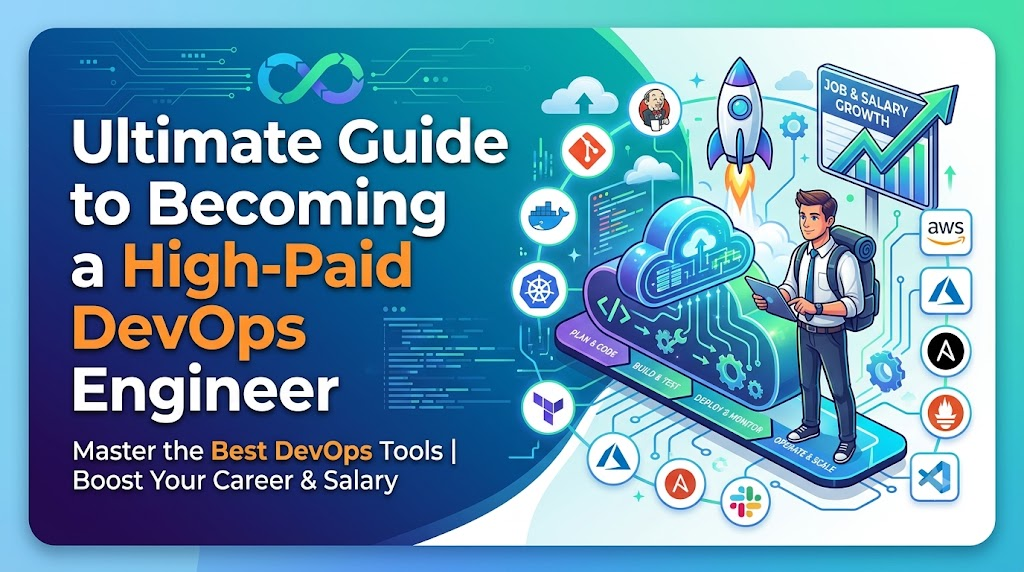
The tech landscape is shifting at a breakneck pace. Companies no longer have the luxury of waiting months for software updates, pushing engineering teams to deploy faster while maintaining absolute system stability. If you want to bridge the gap between development and operations, mastering DevOps is one of the most lucrative and rewarding career moves you can make today.
However, breaking into the field or moving up the ranks can feel overwhelming. With an ever-evolving ecosystem of containerization, cloud computing, and automated pipelines, knowing where to focus your energy is critical. This comprehensive guide will break down the essential DevOps engineer skills you need, the top tools to learn, and a clear path to landing your dream role in this fast-growing domain.
Why This Topic Matters
DevOps is no longer just a trendy buzzword or a luxury for tech giants—it is the operational backbone of modern software development. Organizations that embrace automation and collaborative engineering can ship code faster, recover from outages in minutes instead of hours, and outpace their competition. For individual professionals, this high demand translates directly into exceptional job security and premium compensation. Whether you are a system administrator, a software developer, or an absolute newcomer, understanding how to build resilient systems is a surefire way to future-proof your career.
Industry Overview: The Shift to Modern Engineering
Historically, software development was siloed. Developers wrote code, and operations teams were tasked with deploying and maintaining it, often leading to friction, finger-pointing, and delayed releases.
Today, that barrier has dissolved. Modern tech organizations rely on continuous delivery and cross-functional teams to manage massive infrastructure footprints. The industry has also matured beyond basic scripting. We are seeing a massive shift toward Platform Engineering and Site Reliability Engineering (SRE), where the goal is to build internal developer platforms that simplify internal workflows. Security is also being baked directly into the development lifecycle from day one, giving rise to the DevSecOps movement.
Comprehensive DevOps Roadmap: Step-by-Step
Navigating this career track requires a structured approach. A structured DevOps roadmap serves as your blueprint, helping you master fundamental concepts before diving into complex infrastructure automation.
[Linux & Scripting Essentials]
          │
          ▼
[Source Control & Git]
          │
          ▼
[Continuous Integration (CI/CD)]
          │
          ▼
[Cloud Computing & Infrastructure as Code (IaC)]
          │
          ▼
[Containers & Orchestration (Docker & Kubernetes)]
          │
          ▼
[Monitoring, Observability & Feedback Loops]
Step 1: Foundational Systems & Scripting
Before touching advanced cloud tools, you must get comfortable with the operating system that powers the internet: Linux. Learn how to navigate the command line, manage permissions, configure networking, and automate repetitive tasks using Bash or Python scripts.
Step 2: Version Control (The Source of Truth)
Every piece of code and configuration must be tracked. Master Git workflows, branching strategies, and repository management platforms like GitHub or GitLab.
Step 3: CI/CD Pipeline Automation
Automation is the heart of DevOps. Learn how to configure a build server to automatically compile, test, and package code whenever a developer pushes a change.
Step 4: Infrastructure as Code (IaC) and Cloud Platforms
In the modern landscape, you don’t click buttons in a dashboard to spin up servers. You write code to provision entire environments, ensuring repeatability and eliminating configuration drift across your cloud providers.
Step 5: Containerization and Orchestration
Isolate applications and their dependencies into lightweight packages that run consistently on any machine, then learn how to manage thousands of these packages across a cluster of servers.
Step 6: Observability and Feedback Loops
You cannot fix what you cannot see. Set up robust dashboards and alerting systems to monitor application health and track system performance in real-time.
Important Concepts Every Engineer Must Know
To effectively implement automation, you need to understand the architectural patterns that drive modern software delivery:
- Continuous Integration / Continuous Delivery (CI/CD): The practice of automating code integration, automated testing, and artifact deployment to ensure frequent, low-risk releases.
- Infrastructure as Code (IaC): Managing and provisioning infrastructure through machine-readable definition files rather than manual configuration.
- Microservices vs. Monoliths: Breaking down large, single-unit applications into small, independent, loosely coupled services that communicate over APIs.
- Immutable Infrastructure: An operational paradigm where servers are never modified after deployment. If an update is required, new servers are built from a common image to replace the old ones, minimizing unexpected behavior.
Benefits of Adopting a DevOps Culture
When engineering teams embrace these methodologies, the business benefits are immediate and measurable:
- Accelerated Time-to-Market: Automated testing and delivery pipelines significantly reduce the time it takes to move a feature from a developer’s laptop to production.
- Higher Deployment Frequency: Teams can ship updates multiple times a day with high confidence, rather than waiting for stressful weekend release windows.
- Reduced Defect Rates: Automated code analysis catches bugs and security flaws early in the cycle, long before they reach end-users.
- Improved Collaboration: Breaking down silos creates shared ownership of stability, performance, and security across the entire engineering department.
Common Challenges and How to Overcome Them
Transitioning to this mindset isn’t without its hurdles. Here are the most common friction points and how to address them:
- The “Not My Job” Mentality: Cultural resistance is often a bigger blocker than technical issues. Encourage shared responsibilities and include developers in on-call rotations to foster empathy.
- Tool Fatigue: It is easy to get distracted by shiny new open-source software. Focus heavily on mastering the underlying core principles rather than trying to learn every single tool on the market.
- Ignoring Security: Leaving security audits as a final step right before production creates massive bottlenecks. Shift security left by integrating static application security testing (SAST) tools directly into your early CI/CD pipelines.
Engineering Best Practices
- Version Everything: Treat your application code, database schemas, documentation, and infrastructure definitions with the exact same rigor. Everything belongs in version control.
- Automate Defensively: If you find yourself running a command or fixing a manual error more than twice, write an automated script or configuration template to handle it permanently.
- Design for Failure: Assume your cloud servers will crash unexpectedly. Build highly available, self-healing architectures that automatically spin up healthy replacements without human intervention.
- Keep Pipelines Fast: Long, bloated build times kill developer productivity. Keep your automated feedback loops tight by optimizing test suites and caching build dependencies intelligently.
Practical Example: Building an Automated Pipeline
Let’s look at a typical, real-world workflow for a modern web application:
- Code Commit: A developer pushes a new feature branch to GitHub.
- Automated Linting & Testing: GitHub Actions triggers a workflow that runs linting checks and executes unit tests to verify code quality.
- Container Build: Once tests pass, a Docker image is compiled and automatically pushed to a secure cloud registry.
- Staging Deployment: Terraform configures a test environment, and the application is deployed to a staging cluster for final validation.
- Production Release: After a manual sign-off or successful automated integration checks, the updated container is deployed to production using a rolling update strategy to eliminate downtime.
Recommended Core Tools
To turn these workflows into reality, you will need a reliable toolkit. The table below highlights some of the best DevOps tools categorized by their specific role in the software lifecycle:
| Category | Industry-Standard Tools | Purpose |
| Version Control | Git, GitHub, GitLab | Managing code repositories, branching, and collaboration. |
| CI/CD Automation | Jenkins, GitHub Actions, GitLab CI | Automating code builds, test execution, and application delivery. |
| Containerization | Docker, Containers | Packaging applications with all dependencies into clean, predictable units. |
| Orchestration | Kubernetes | Managing, scaling, and scheduling containerized applications across clusters. |
| Infrastructure as Code | Terraform, Ansible | Automating cloud infrastructure provisioning and configuration management. |
| Cloud Providers | AWS, Azure, Google Cloud Platform (GCP) | Hosting infrastructure, scalable managed services, and cloud computing resources. |
| Observability & Monitoring | Prometheus, Grafana, ELK Stack | Collecting metrics, visualization, and log aggregation for debugging. |
When you are starting your journey, trying to learn all of these at once can lead to burnout. Taking a structured DevOps tutorial for beginners can provide the clear, focused guidance needed to master these technologies step-by-step.
Measuring Success with DORA Metrics Tools
You cannot improve what you do not measure. Elite engineering organizations judge their operational efficiency using data points established by the DevOps Research and Assessment (DORA) group. Specialized DORA metrics tools track these four foundational key performance indicators:
- Deployment Frequency: How often does your team successfully ship code to production?
- Lead Time for Changes: How long does it take for a line of code to go from commit to successfully running in production?
- Change Failure Rate: What percentage of deployments cause a failure in production that requires an immediate hotfix or rollback?
- Time to Restore Service: How long does it take your team to recover from a production outage or service degradation?
Career Opportunities & Market Demand
The job market for skilled cloud professionals remains incredibly strong. Organizations of all sizes—from agile startups to Fortune 500 enterprises—are looking for talent to help them modernize infrastructure, optimize cloud spend, and boost development velocity. Additionally, the career path offers clear vertical progression. You can move from an associate engineer up to a senior cloud architect, or transition into highly specialized domains like Platform Engineering, Site Reliability Engineering, or engineering leadership.
DevOps Engineer Salary Insights
Because this role requires a unique combination of software engineering and systems administration expertise, the compensation reflects that high level of skill.
- Entry-Level / Junior: $80,000 – $105,000 per year
- Mid-Level Specialist: $110,000 – $145,000 per year
- Senior Infrastructure Architect: $150,000 – $190,000+ per year
Note: Salaries vary widely depending on your location, chosen cloud certifications, and hands-on experience with production-scale Kubernetes clusters.
Validating Your Expertise
While hands-on experience is always the ultimate differentiator, earning industry certificates can help validate your skills and make your resume stand out to technical recruiters. Some of the best DevOps certifications to aim for include:
- AWS Certified DevOps Engineer – Professional
- Certified Kubernetes Administrator (CKA)
- HashiCorp Certified: Terraform Associate
- Microsoft Certified: DevOps Engineer Expert
Accelerating Your Learning Journey
Reading documentation is a good start, but reading alone won’t get you a job. To truly understand how these systems scale and behave under load, you need to build things yourself. Working through practical DevOps projects—such as building a multi-tier web application, setting up a secure CI/CD pipeline from scratch, or configuring an autoscale-ready Kubernetes cluster—is the fastest way to turn abstract theory into concrete, job-ready skills.
If you are looking for a guided approach, structured learning can save you hundreds of hours of frustration. Finding the best DevOps course that combines up-to-date theoretical foundations with deep, hands-on lab work will give you the confidence needed to tackle real corporate environments.
For high-quality, comprehensive roadmaps, deep-dive technical tutorials, and structured learning paths tailored for every skill level, exploring the curated learning resources available at BestDevOps.com is an excellent way to accelerate your progress.
Frequently Asked Questions
What does a DevOps engineer actually do on a daily basis?
A DevOps engineer builds and maintains the automated infrastructure that allows software developers to ship code quickly and safely. This includes writing infrastructure as code templates, tuning CI/CD pipelines, optimizing container orchestration clusters, and setting up monitoring dashboards to ensure high availability.
Can a complete beginner learn DevOps?
Yes, absolutely. While it requires dedication, anyone can learn it by following a structured path. Start by mastering Linux systems, basic bash scripting, and Git version control before moving on to cloud architecture, container platforms, and automation tools.
Do I need to be an expert programmer to work in DevOps?
No, you do not need to write complex application logic like a full-stack developer. However, you do need a solid understanding of programming concepts and should be comfortable writing automation scripts, configuration files, and infrastructure logic using languages like Python, Bash, or Go.
Which cloud platform should I learn first?
Amazon Web Services (AWS) currently holds the largest market share, making it an excellent starting choice with abundant job openings. However, Microsoft Azure and Google Cloud Platform (GCP) are also widely adopted in corporate and enterprise environments, and the core infrastructure principles apply cleanly across all three.
What is the difference between DevOps and SRE?
While both roles focus on bridging development and operations, DevOps focuses heavily on speed, continuous integration, and optimizing the deployment pipeline lifecycle. Site Reliability Engineering (SRE) treats operations as a software engineering problem, focusing heavily on application scalability, system reliability, and automation to prevent downtime.
How should I prepare for technical interviews?
Focus your preparation on systemic design, core networking principles, Linux internals, troubleshooting exercises, and practical automation scripting. Reviewing a dedicated list of DevOps interview questions can help you understand how to structure your answers and explain complex architecture choices clearly under pressure.
Why is Kubernetes considered so important?
Kubernetes has become the industry standard for container orchestration. It automates the deployment, scaling, management, and networking of containerized applications across cloud environments, ensuring high availability and efficient resource utilization at scale.
How do DORA metrics help engineering teams?
DORA metrics give engineering leaders clear, data-driven insights into the efficiency and stability of their software delivery lifecycle. Tracking these metrics helps pinpoint workflow bottlenecks, improve release frequencies, and lower production error rates over time.
Key Takeaways
- Master the Fundamentals First: Solid knowledge of Linux, Git, and networking is far more valuable than blindly memorizing specific vendor tool commands.
- Automate Everything: Focus on treating infrastructure as code to ensure all environments are repeatable, predictable, and free from configuration drift.
- Prioritize Observability: Build robust monitoring systems early on so you can identify and resolve production issues before they impact end-users.
- Focus on Continuous Practice: Build real projects and configure live pipelines to develop the practical, problem-solving skills required in corporate environments.
Conclusion
Transitioning into a DevOps career path is an incredibly rewarding journey that unlocks excellent career growth, high compensation, and the opportunity to solve complex, large-scale engineering problems. By systematically building your skills, pursuing recognized cloud certifications, and mastering core automation principles, you can position yourself as a highly valuable asset to any engineering organization.
As you prepare to take your next step, having the right reference material makes all the difference. To explore comprehensive study guides, practice interview questions, and practical learning resources designed to help you stand out in the job market, head over to BestDevOps.com to streamline your career transition.